Papua New Guinea
Introduction
If you want to get to 7,000 species you have to bird Papua New Guinea. With a population of between 11 million and 17 million depending on who you’re talking to. And compared to the sprawl of Indonesia it is very calm. The birding here is supposedly similar to Sulawesi and Bali/East Java. Low bird density but very cool birds. I will be here 23 days, five days on New Britain, (which has its only very special endemics), and 18 days on Papua New Guinea proper.
I flew here from Bali via Brisbane. I knew I was on the mend because I had a yummy scrambled eggs and toast and tea. And there are open fields on the other side of the airport runways so I actually got to see four new lifers!
There is a Rockjumper trip that is just concluding and most of the people on that trip and most of the people on our trip are all in New Britain.
New Britain
July 21, 2026
The day began with an ATM capturing my ATM card at the airport. I might be able to get it back at the bank branch in Port Moseby when we get back there. We’ll see. If you travel a lot you understand that unpleasant things are going to happen. It’s just part of travel.
The plane was late departing but that was a good thing according to the people on the other PNG trip because at least it wasn’t cancelled. My first PNG lifer was actually on in the grass by the runway, a masked lapwing Paul pointed out to me. (Paul is our guide for the whole trip and Erik is also with us for New Britain.) The trip to New Britain was uneventful.
We all loaded onto a huge bus and took an hour ride on so, so roads. Prior to lunch we scanned the ocean and reefs off the hotel and discovered brown noddy, greater crested tern, common tern, lesser frigatebird and brown booby.
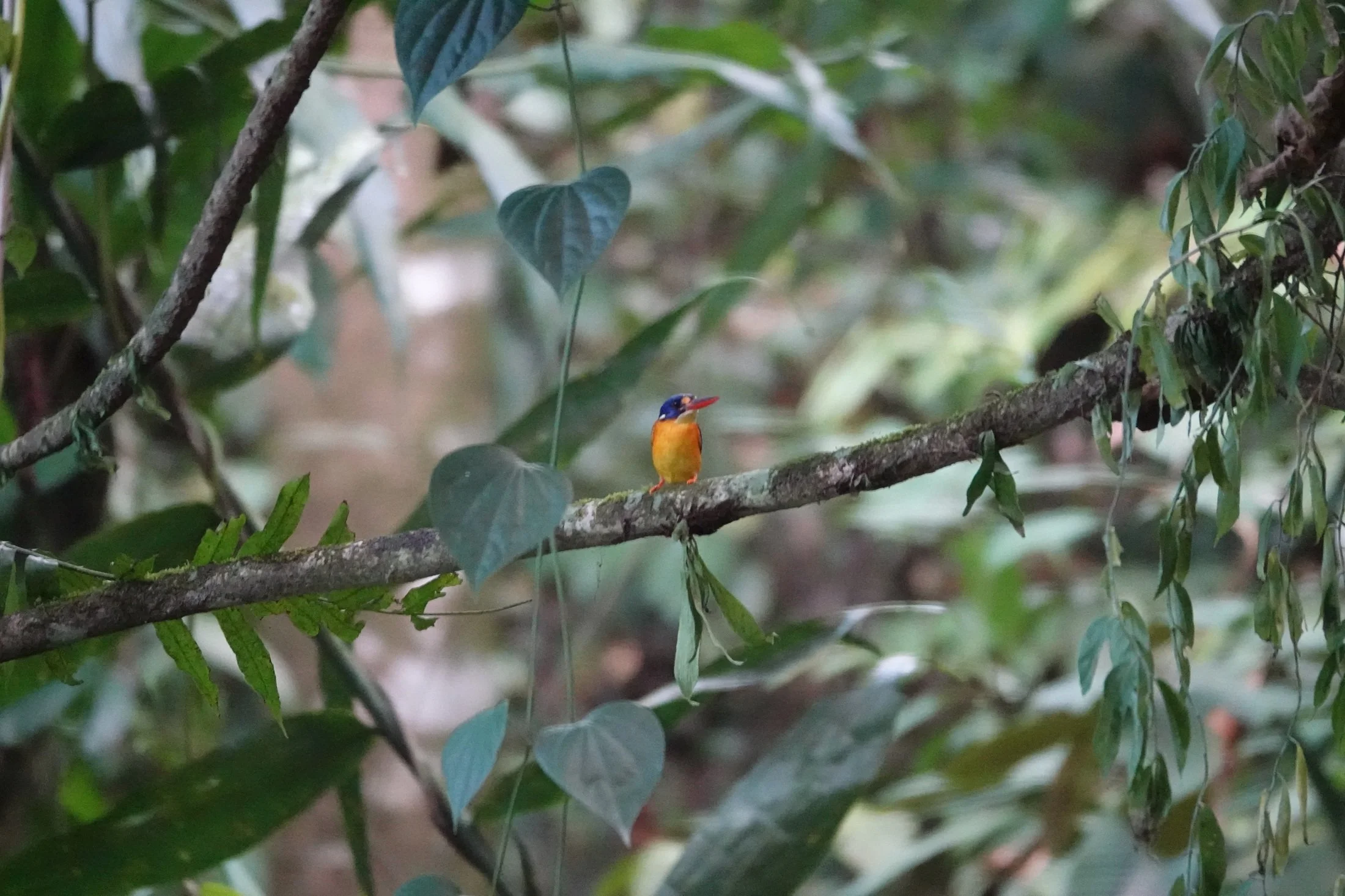
We had lunch and then after checking into our bungalows we headed out for a short afternoon of birding. We birded a place called Kilu Ridge. It was great fun and we saw a surprisingly large number of birds including red-knobbed imperial pigeon, yellowish imperial pigeon, white-rumped swiftlet, Blyth’s hornbill, a very cooperative New Britain dwarf kingfisher, (pictured), the very loud Papuan eclectus, red-flanked lorikeet shooting like bullets, coconut lorikeet, ashy myzomela, New Britain friarbird, many Bismark crows, buff-bellied mannikin and Pacific swallows. And these are just the birds that were new to me. Also lots of old friends but what a fun afternoon of birding.
27 species, 13 lifers
Megapode and Lots More
July 22, 2026
We had two spectacular birding sessions today. The morning session was in Garu WMA. The highlight of the session was seeing a Melanesian megapode. Like our old friends the maleo they bury their eggs to hatch them. One of our guides flushed one of them from a place where the ground is thermally warmed. He was great because about five minutes later he found the bird perched. We all wandered into the forest and got great views.
The rest of the session had moments that were incredibly birdy and others that were slow. Amboyna cuckoo-dove, a beautiful brown color, knob-billed fruit dove, like the red-knobbed imperial-pigeon in that it had a red knob on its bill but in miniature, variable goshawk, great views of two New Britain kingfishers, great views of Melanesian kingfishers, the much desired buff-faced pygmy-parrot, many purple-bellied lory, varied triller were the greatest hits. Both pied coucal and violaceous coucal called very loudly but we couldn’t get them to come out.
And they didn’t end at the end of the session. On the drive home we saw a black bittern skulking in the palm oil trees. And a blue-eyed cockatoo briefly landed in a palm tree.
After lunch and a nap we went to the grasslands of Numondo cattle farm. What a fun and satisfying session. Australian reed warblers were in the grasses and were made me reminisce about London and the reed warblers there. Papuan grassbirds also showed very well. And two blue-breasted quail made brief appearances but we got good views. We all walked a picket line at one point through the grasses but nothing flushed. It is so dry here. It hasn’t rained in three weeks according to David, one of the local guides.
The session ended with a chase of a white-bowed crake that turned from an HO to a seen to a picture. It’s an old friend from Sulawesi but what a gorgeous bird. And what a wonderful way to end a very satisfying day of birding.
I continue to recover but I ate way, way too much last night of the yummy food off the buffet where we’re staying. I paid for it all night long with indigestion. Tonight I just had soup and bread. Hopefully it’ll be a little calmer night.
37 species, 17 lifers
The Outer Islands
July 23, 2026
A Pacific koel woke me up with its loud call this morning. So typical of a koel, loud voice, early morning.
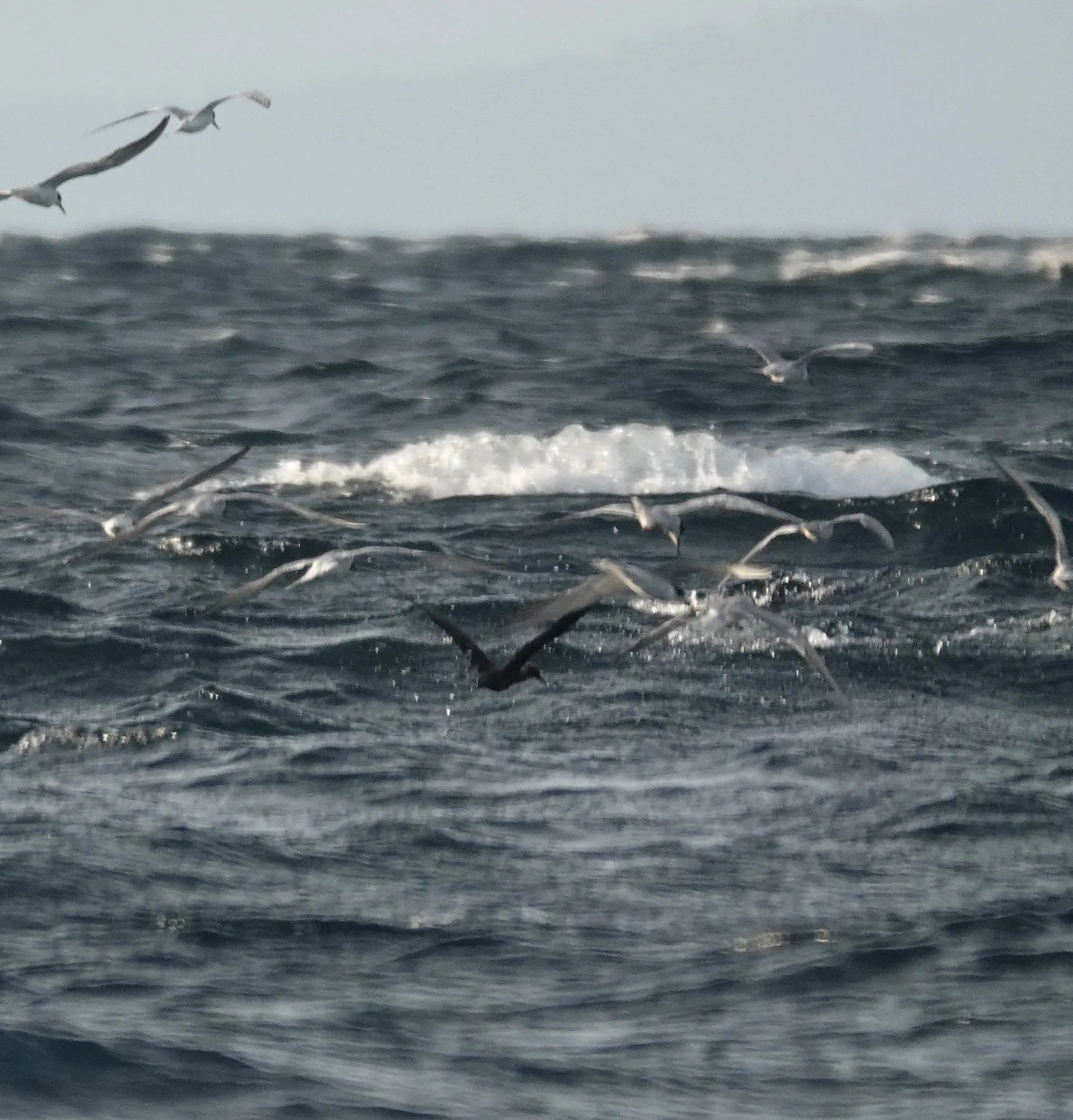
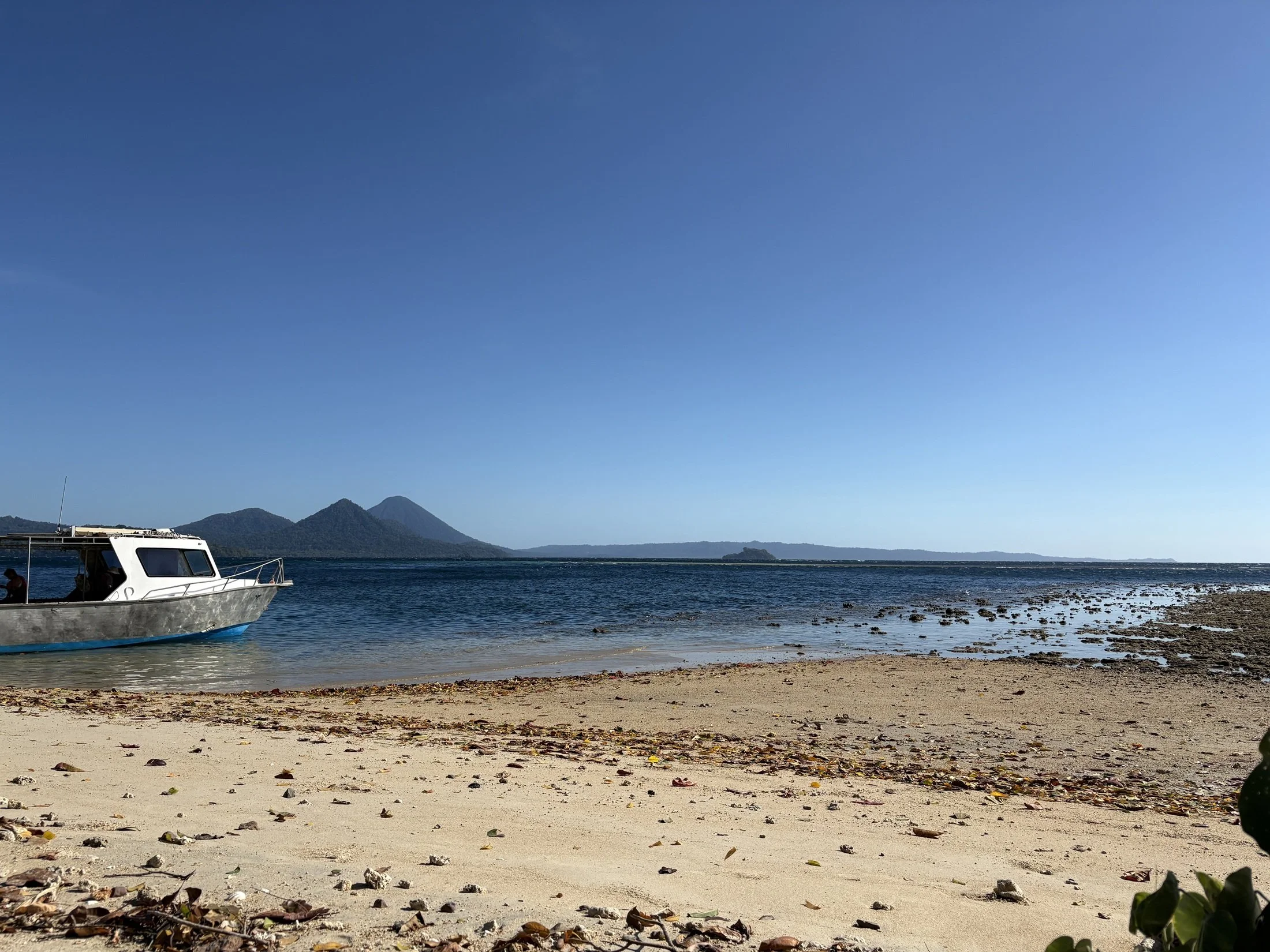
This morning after breakfast we boarded a little boat, (maybe a 28 footer or so), and headed towards some of the outer islands. Amongst the many birds we saw on the trip to the islands were a black noddy and a bridled tern. I actually got a diagnostic picture of the black noddy that I will share.
We spent most of our time at one island. The birds we saw there were nothing short of spectacular. Nicobar pigeons, island imperial-pigeons, the tiny bland until you see its gorgeous red neck Sclater’s myzomela, the brightly colored Bismark whistler, island monarch and the stunning spot-breasted cuckoo-dove were amongst the birds we saw.
We then proceeded through pretty rough seas to a quiet stretch of beach where many snorkeled. I hadn’t brought my swimming trunks but in retrospect after all the illness maybe a lie down in the shade on a white sand beach wasn’t a horrible thing.
As has been the case with all the food at this lodge the packed lunch was spectacular. I don’t know which was better, the meatloaf or the chicken legs.
We took the afternoon off and we will go owling after supper tonight so there may be an addendum to this report. What a fun, fun day on the ocean.
24 species, 9 lifers
Pink-legged Rail
July 24, 2026
Today revolved around birding along the Kulu River. We did it twice. In the morning we struggled with three skulkers. Black-capped paradise-kingfisher, Bismark pitta, and New Britain boobook. I got passable views of the kingfisher and the pitta and I got a great recording of the pitta. The boobook was right next to us, but it wouldn’t show itself. Three great birds that took a lot of work.
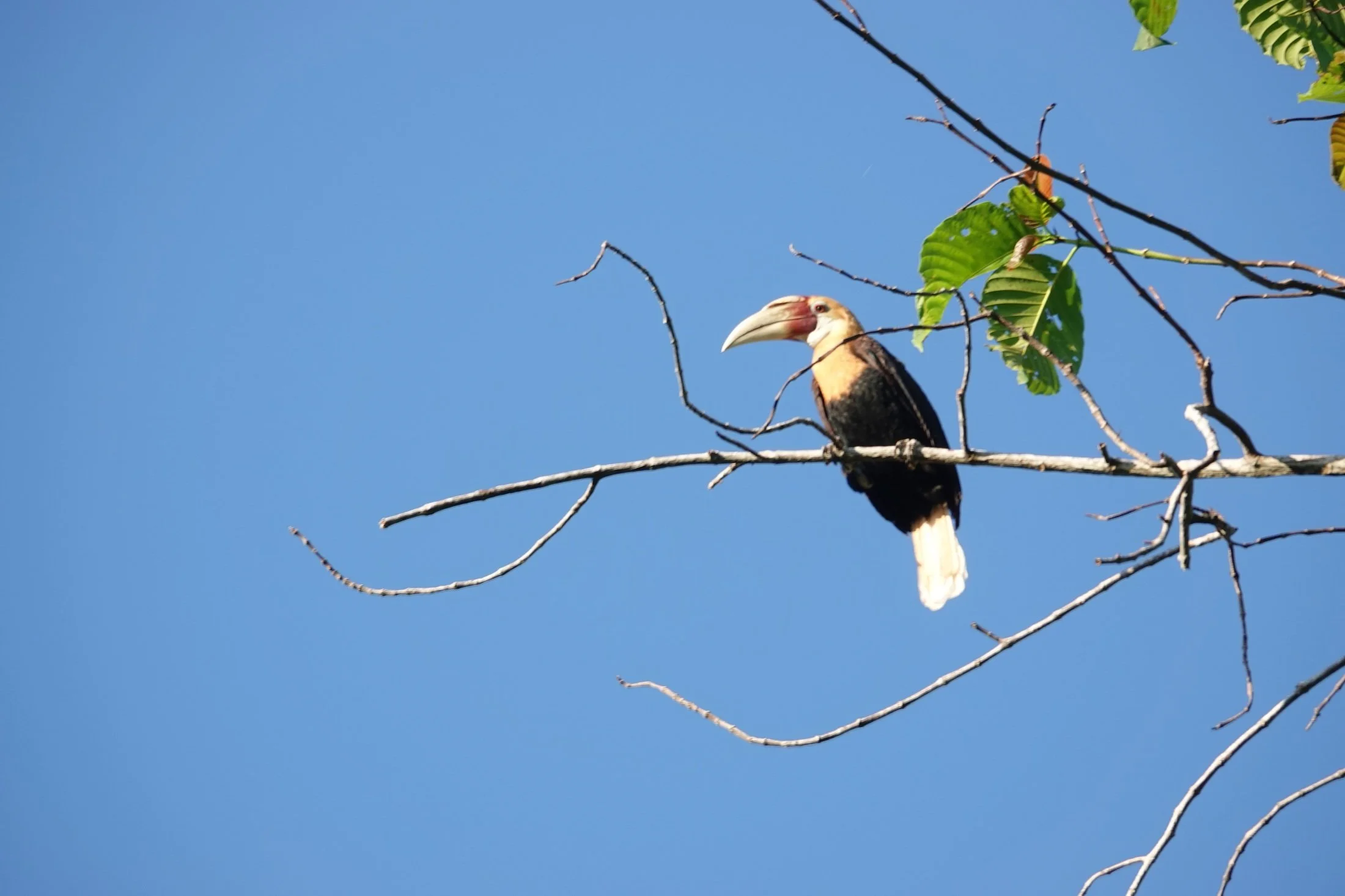
There were also many old friends along the way including Blyth’s hornbill, (pictured). Their wingbeats are other worldly and I got a good recording of them this evening.
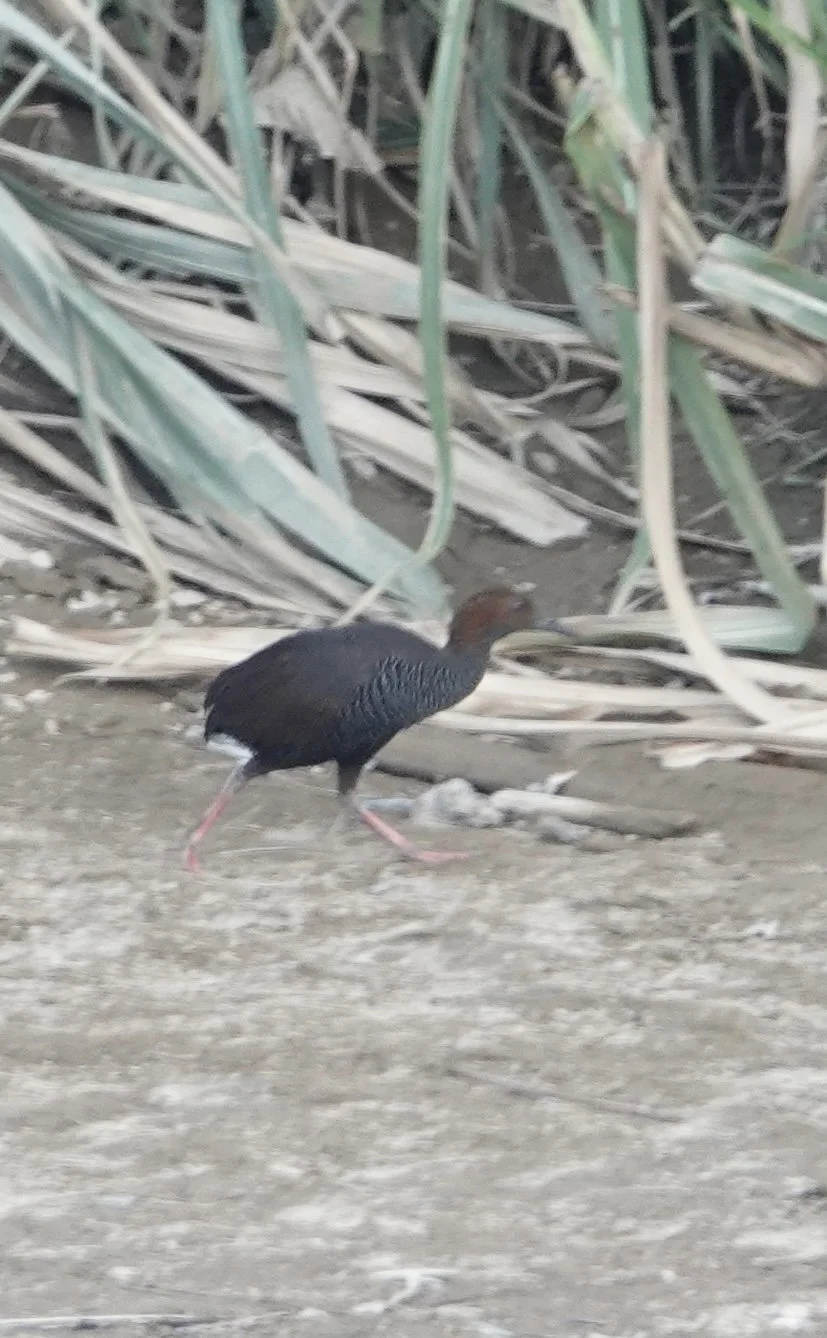
After lunch and a short break, we went back to the Kulu River, just a little different area. Paul soon found a Bismark imperial-pigeon and we also saw a white-bellied cuckooshrike. But the star of the show was two pink-footed rail, (pictured), that came prancing along the edge of the beach we overlooked.
For those of you at home playing along in the eBird world you’re probably wondering about pink-legged rail. Actually it has another name in the eBird world New Britain rail. I like both names but pink-legged best describes these wonderful birds and their delight pink legs. They are a mega bird.
We looked for and dipped yet again on owls tonight. (Yup, that was the result last night too.) But what a way to end the New Britain leg of PNG, pink-legged rail, (AKA New Britain rail).
31 species, 6 lifers
Grounded
July 25, 2026
Sigh! We headed to the airport this morning, destination PNG. Nope, nope and nope. Our destination was the Quonset hut turned terminal at Haskins Airport as they make renovations to the terminal because our flight was cancelled. This is apparently a way of life here with lots of flight cancellations. We sat in the airport from about 9:00 AM to 4:30 PM. I did manage a lifer when I saw two singing starlings. Meanwhile Paul and Erik were feverishly working out alternatives. The airline wanted to put us up at a modest hotel but they didn’t have enough rooms. We ended up back at Walindi Dive Resort where we were for three nights. A fantastic place with incredible buffet dinners. I’m making this very short tonight because tomorrow we have to get up in the wee hours of the morning to try to get a 7:00 AM flight. Fingers crossed.
10 species, one lifer
PNG
July 26, 2026
This morning we got up at an obscenely early hour to make it to the airport for 5:00 AM check in to the 7:00 AM flight. It seemed like seats on the flight were being given out in some sort of lottery. I was fortunate enough to get a seat as were two of the three other continuing birders for the PNG tour. Once we got on board, I immediately fell asleep and slept most of the way to Port Moresby.
At the airport we were picked up and delivered to the hotel. Meanwhile Paul was working to get us lunch and get us a ride to a spot to bird this afternoon.
Lunch was yummy toasties and a cup of tea. It was a bit of a rush because the driver wanted to drop us off at the birding spot and then do another fare.
It was an hour to Varirata National Park where we birded. Phil, who is joining the PNG tour here, was already birding there with a local guide though we never saw them.
What a spot for birding this was. It was like so much of the birding in this part of the world. Very quiet most of the time but when there were birds, they were almost always special birds. We started out with plain honeyeaters and a hooded pitohui.
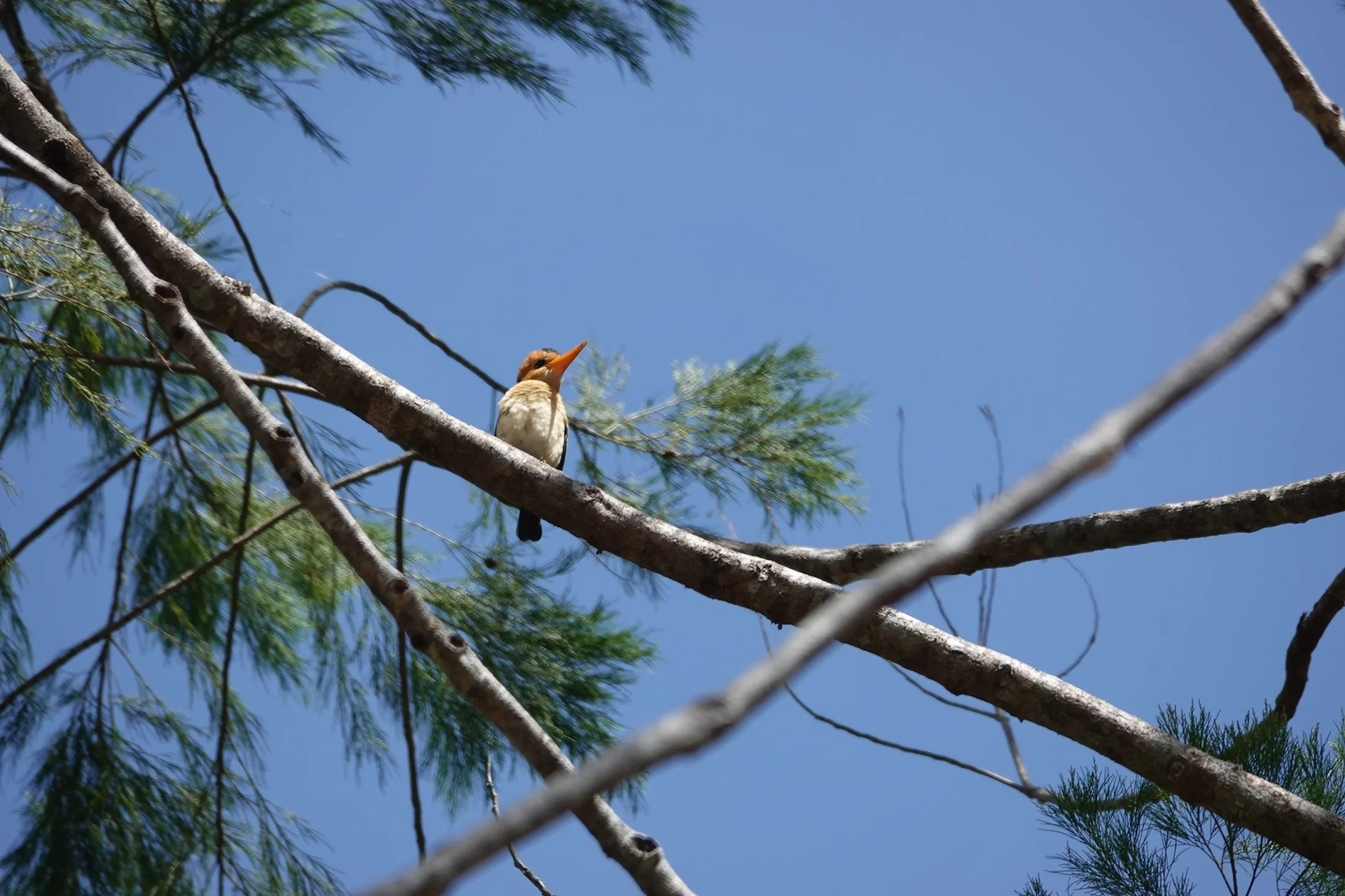
As we searched unsuccessfully for a barking owl, we did get great views of a pygmy eagle soaring in the distance. And we heard the melodious tones of green-backed gerygone. A group of black-fronted white-eye also showed well though from on high. And we had spectacular views of a yellow-billed kingfisher, (pictured).
We then started down a trail that we birded the rest of the afternoon. A beautiful little white-faced robin started off the parade. Chestnut-bellied fantail were numerous throughout the forest. We heard a wompoo fruit-dove. It’s aptly named because of the sound of its call. Black-capped lory flew over. We got great views of elegant honeyeater, several yellow-bellied gerygone and a fairy gerygone.
A growling riflebird came screaming by, but we heard many of them in the forest. A brown oriole played hide and seek with us. We got views of it as it flew over and around us several times.
Towards the end of our hike we saw a fruiting tree full of pink-spotted fruit-doves. And Paul was able to track down a brown-headed paradise-kingfisher. What an absolutely gorgeous bird.
There were two real stars today. One was a guest appearance. A gigantic raptor landed on a branch for the briefest of seconds right beside us. I felt like I was in the scene from Lord of the Rings where Gandalf is riding the eagles to rescue Frodo and Sam from Mt. Doom. It was that big. It was a New Guinea eagle. When it landed on that branch, I think it saw us and that’s what spooked it. But what an incredible bird.
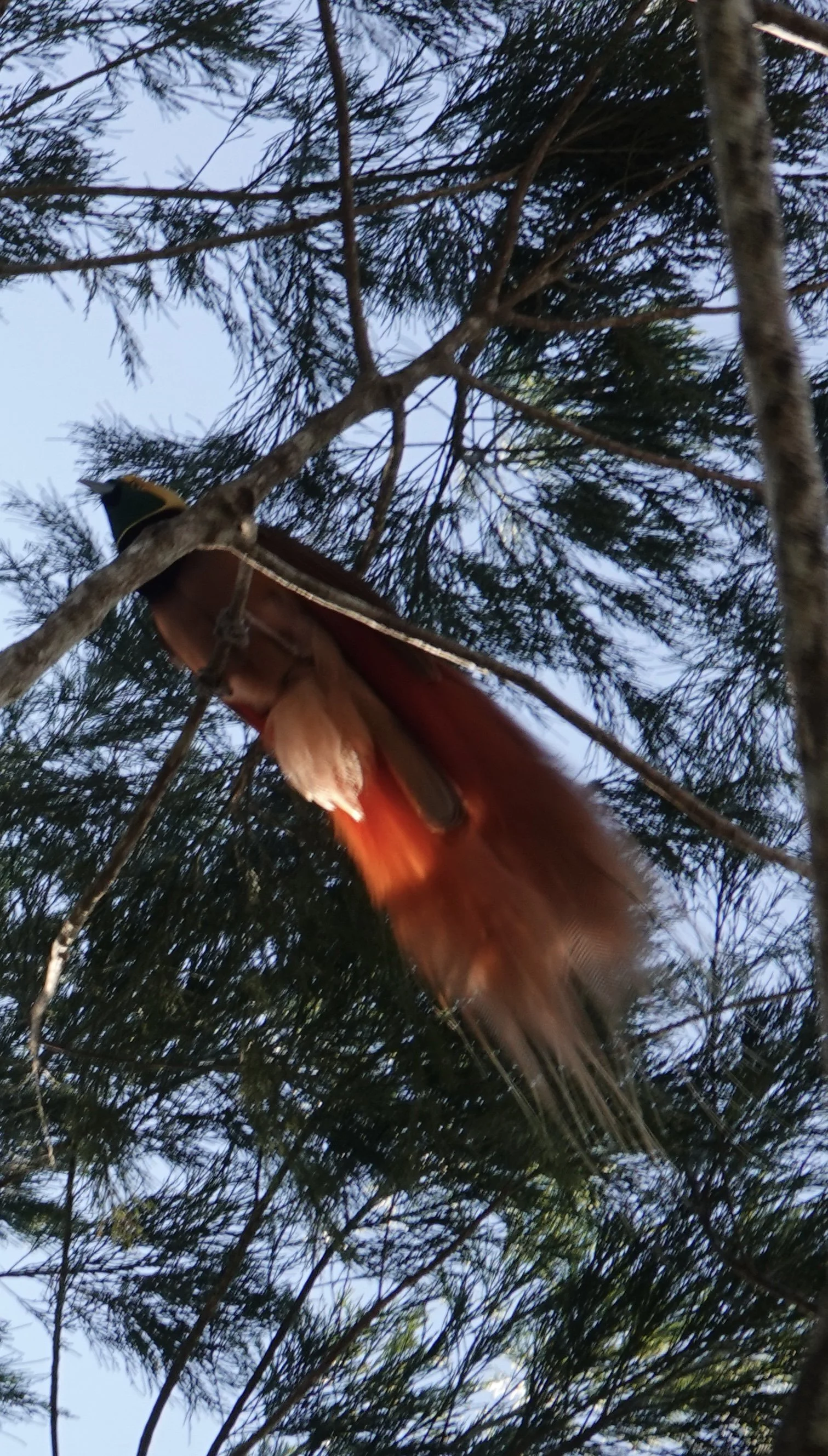
We finished the hike at an overlook of the valley Port Moresby is in. Then our driver took us to a spot known for its Raggiana bird-of-paradise, (pictured). They did not disappoint. For about an hour we looked at these stunning birds as they flew back and forth through this one area of forest. Mostly it was males. When they saw a female they went absolutely bananas. What a fun way to end a great session of birding.
After yesterday’s New Britain debacle this session of birding was just what the doctor ordered to make things all better.
23 species, 19 lifers
El Nino
July 27, 2026
This morning we left Raintree Lodge headed to the airport. We took a 7:15ish flight to Mt. Hagen. (It seems that all flights on PNG are sort of at the time they say they’ll be.) We then took the 40 minute drive to Rondon Ridge Lodge. Wow, what an incredibly beautiful place. By design we had a pretty chill day today. We birded the gardens and grounds of the lodge on our own. I saw two pair of red-collared myzomela. The males are stunning with their red but the rufous color of the females is very pretty as well. A small flock of hooded munia were in the grasses below our rooms. And many New Guinea white-eye were flying around as well.
We had lunch and a chill session. We reconvened at 3:00 PM. It was very windy. Between that and the very dry conditions the birding was extremely challenging. That said I saw ornate melidectes and got great views of a yellow-browed melidectes. Melidectes are large birds that are beautiful in their own unusual way.
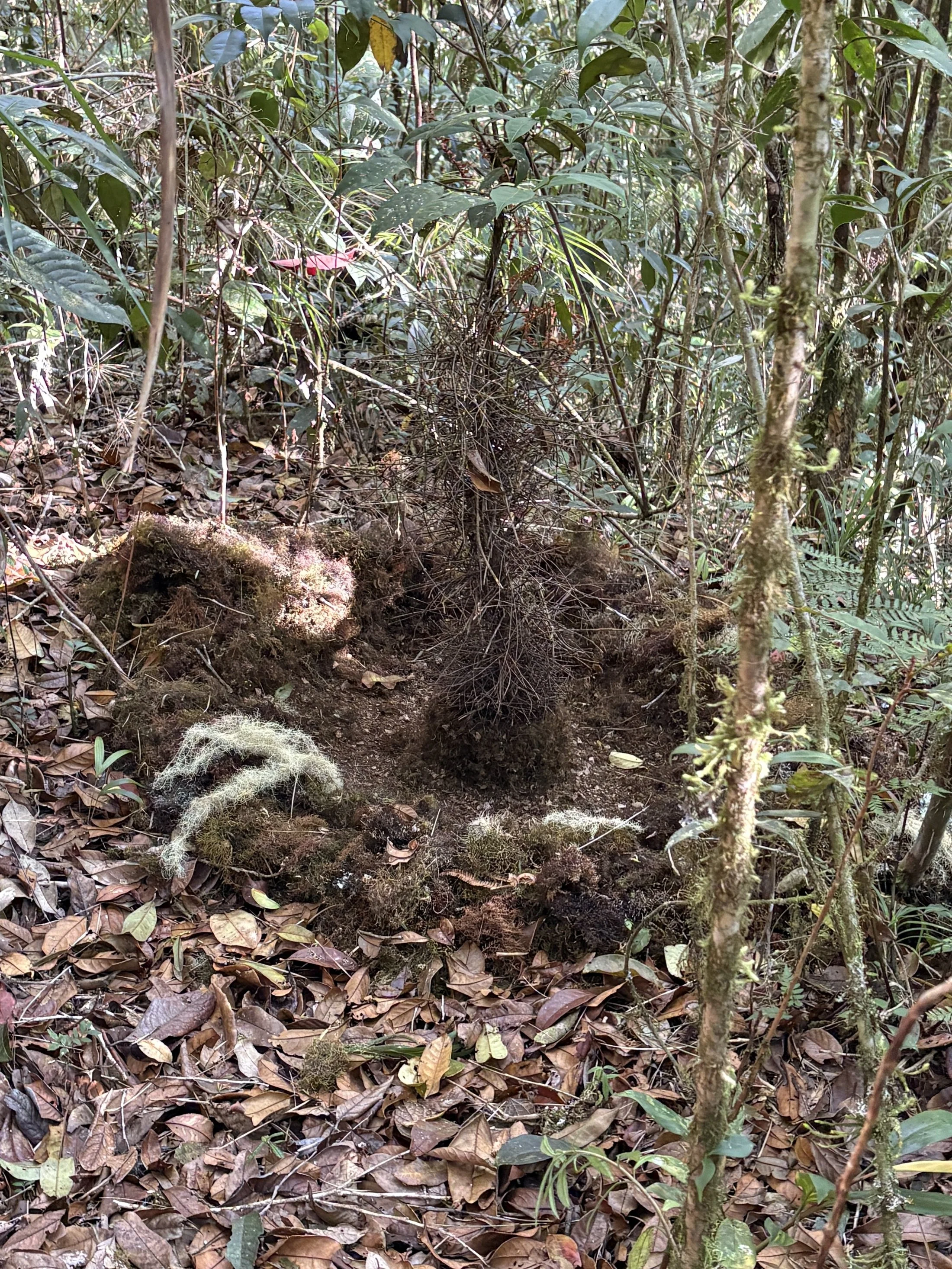
I saw a male black friendly fantail hopping along the ground. And we heard a friendly fantail but it wasn’t quite friendly enough to show itself. Our guide took us to the bower, (pictured), of a MacGregor’s bowerbird. The male builds this to attract the female. That’s the only purpose of the bower. Later a MacGregor’s bowerbird flew over us.
All in it turned into a goodish birding day but we had to work at it.
Throughout my summer birding there has been a continuing theme. Dry. The dry conditions are being caused by a big El Nino condition in the Pacific. The impact is drought and dry conditions in this part of the world. And I suspect that it will be just as bad in Northern Territory, Australia when I go there in a few weeks. These conditions definitely impact the birds. There isn’t nearly as much food for them and their energy levels fall. Although the guides are somewhat reluctant to say it this is making the birding much more difficult. (All the guides are doing a great job of putting us on birds, BTW.) By the end of the summer I will be most interested to see if my expectations for the number of birds I will see will be met. My thought is probably not. It will make planning for the next three years a little more interesting. For now, I’ll leave it at that.
16 species, 8 lifers
Rondon Ridge
July 28, 2026
This morning we hiked up to Rondon Ridge. How can I even begin to describe this day? Papuan mountain-pigeon, Brehm’s tiger-parrot, plum-faced lorikeet, Stella’s lorikeet and black-billed cuckoo-dove were among the birds we saw as we hiked up to the ridge.
Once we got to the ridge the bird hits just kept coming. (And I’m glad they did because it was a very cool morning on top.) Mountain swiftlet, a red-breasted pygmy-parrot I discovered, Loria’s satinbird, black-throated honeyeater, smoky honeyeater, dimorphic fantail and an aptly named regent whistler were some of the birds we saw. We also got good views of many blue-capped ifrita on the trip up and at the top.
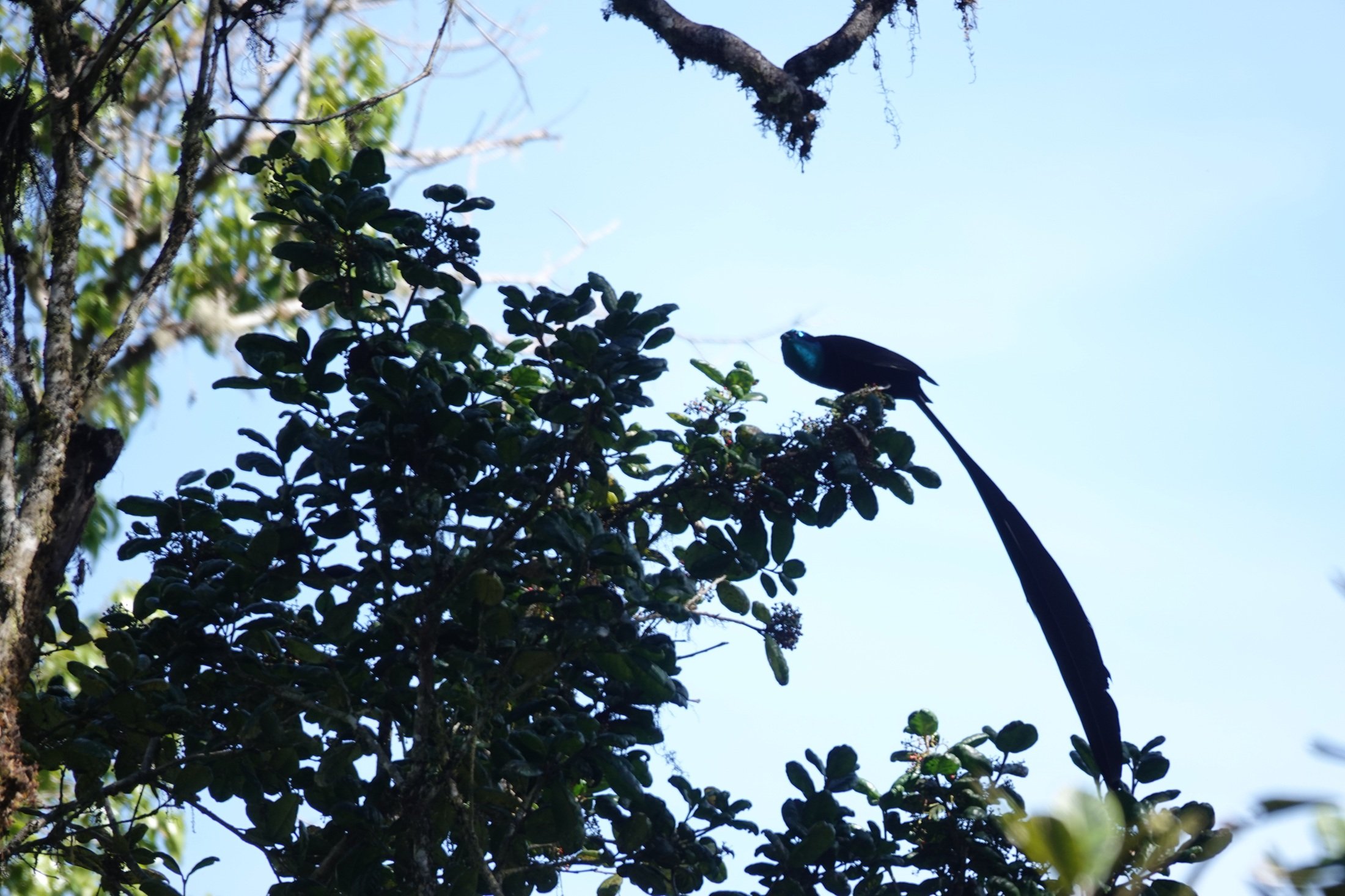
But the stars of the show on top were the birds of paradise. King-of-Saxony bird-of-paradise and Stephanie’s astrapia were on full display. The King-of-Saxony has two outrageous feathers sticking out of the side of its head. And their call sounds like static on a radio. I’m going to include a not very good picture of one completely unedited so that you can get a sense of the outrageous head feathers.
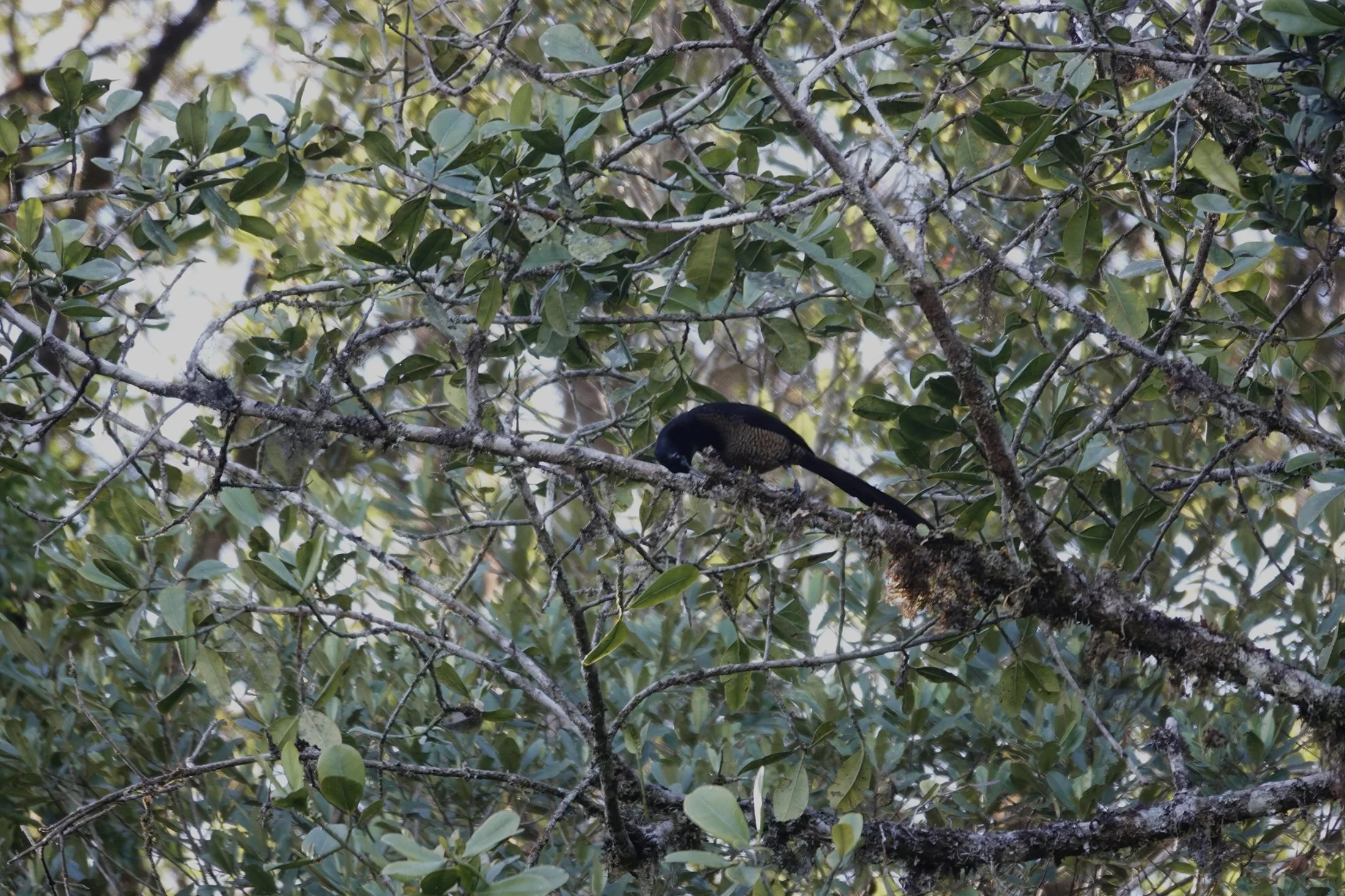
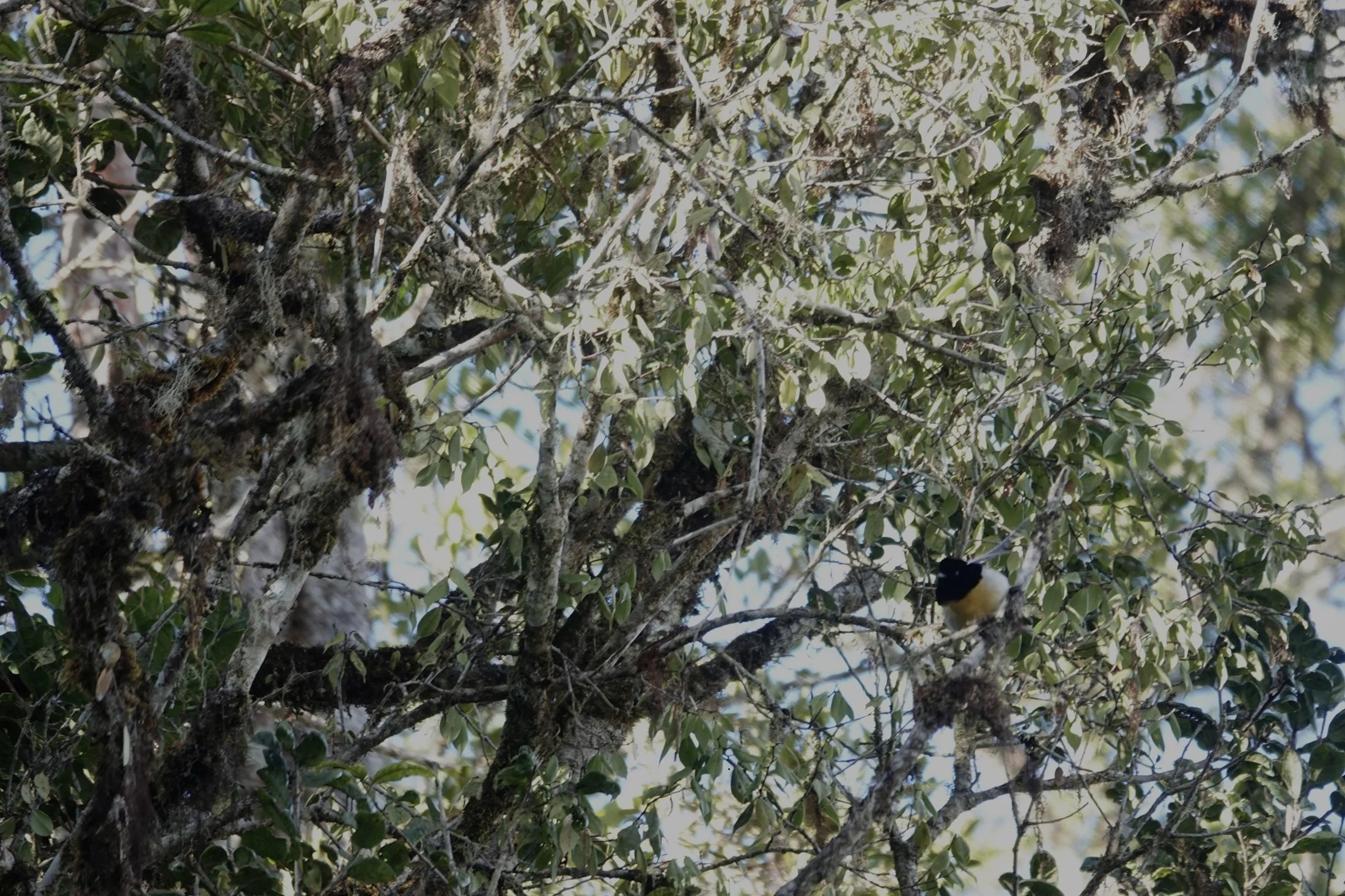
Stephanie’s astrapia is the other bird of paradise that is just crazy beautiful. It has a super long black tail and it’s a mostly black bird. The male that is. The real show stopper is the bib underneath the head on the male. It’s a bright bluish green and when it shows in the sun it is absolutely breathtaking. I have another not very good picture of this bird that I’m going to include just so you can get a sense of the tail on this bird. It’s incredible. I also have a halfway decent picture of a female.
After lunch on the ridge we started back down. A female black-bellied cicadabird, a fan-tailed berrypecker and a wattled ploughbill were three super cool birds we saw on the trip down. The wattled ploughbill is particularly striking because the male has very prominent red wattles.
After a break we did one more session of birding. A little less windy this afternoon. Blue-gray robin and a greater lophorina were among the birds we saw.
What an incredible day of birding.
26 species, 21 lifers
Paradise in Hiding
July 29, 2026
This morning we went to a hide owned by a local named Paul and we went to a second hide owned by him in the afternoon. Both are very well built and as hides go very comfortable.
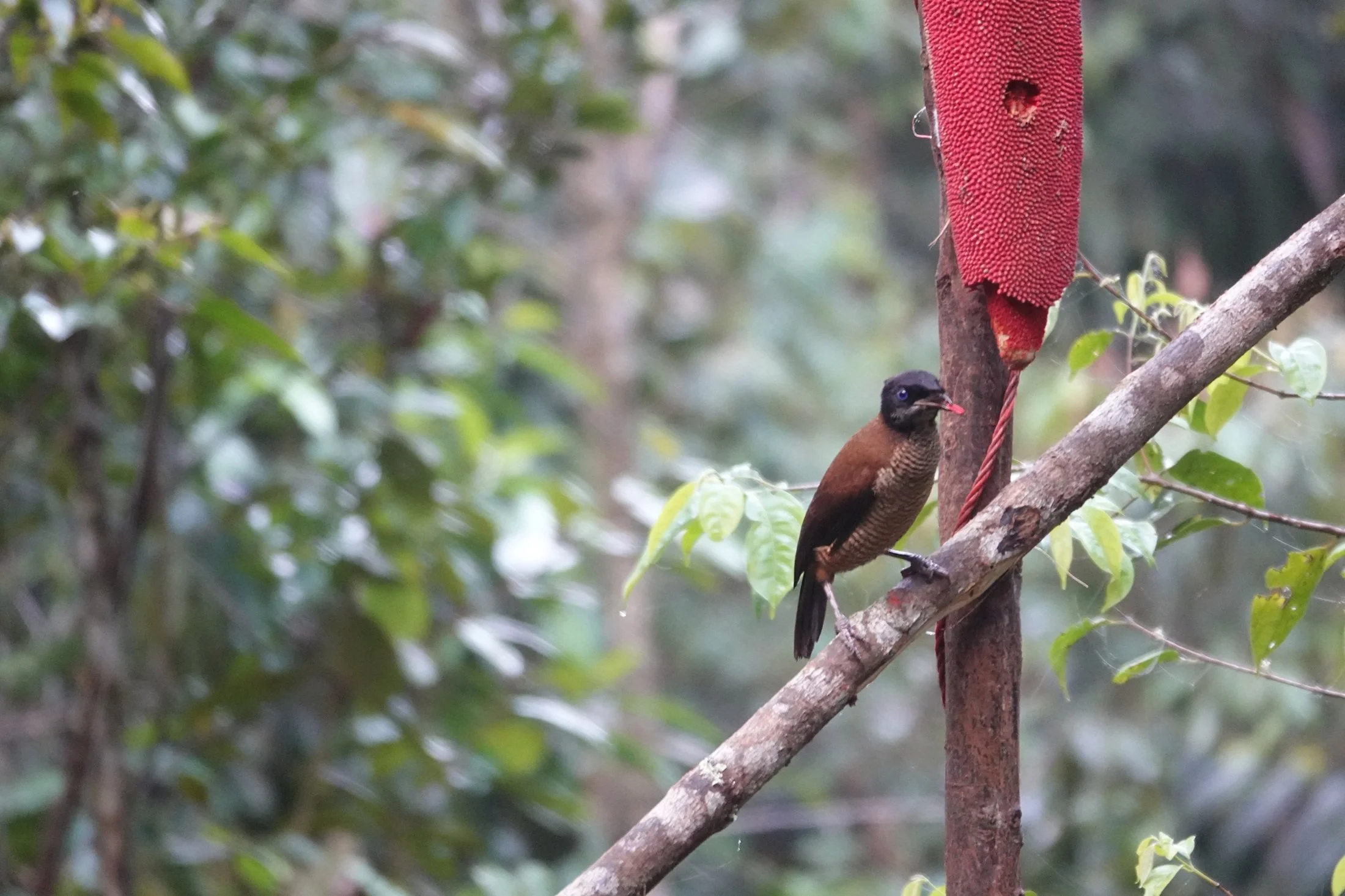
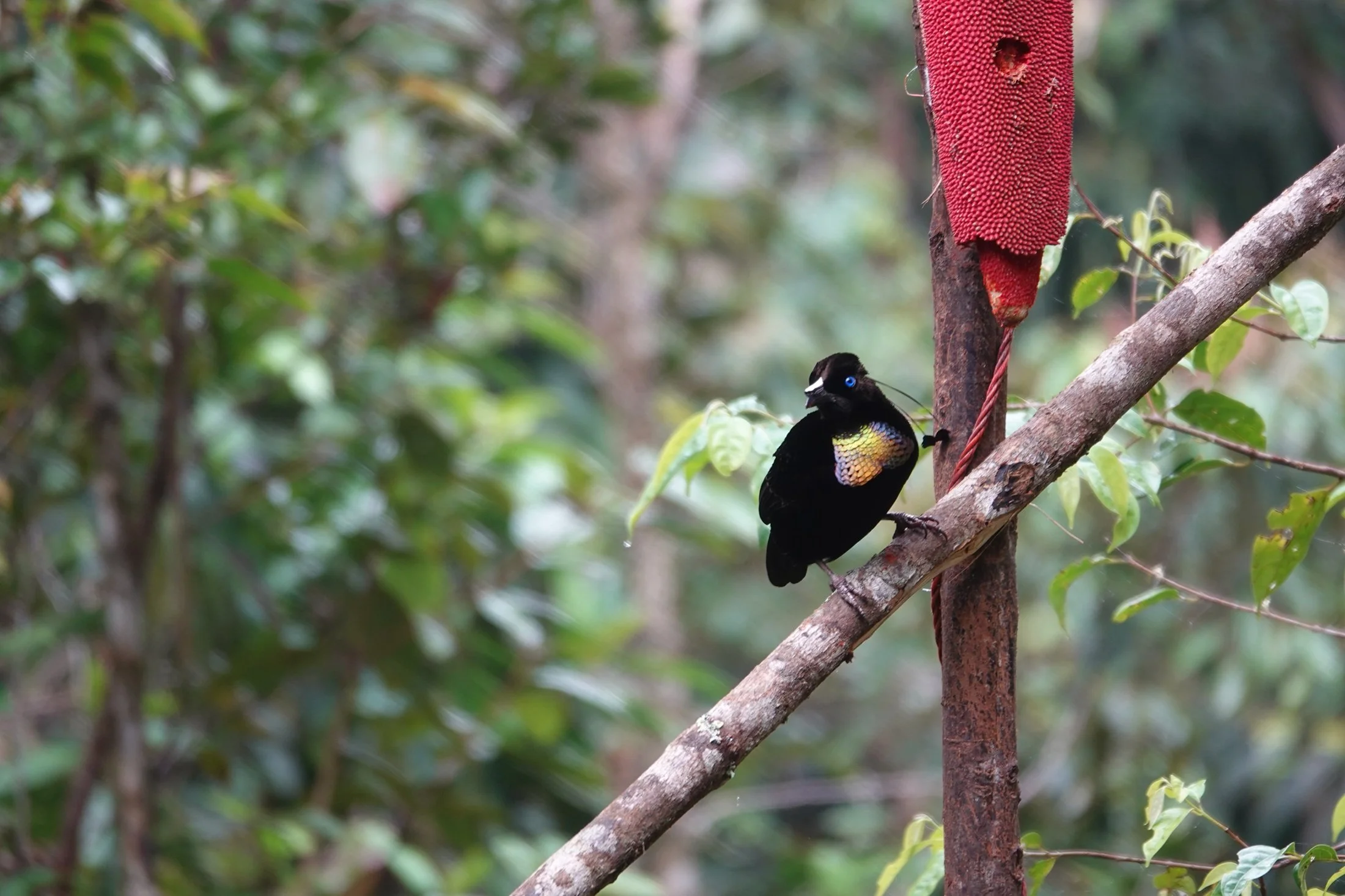
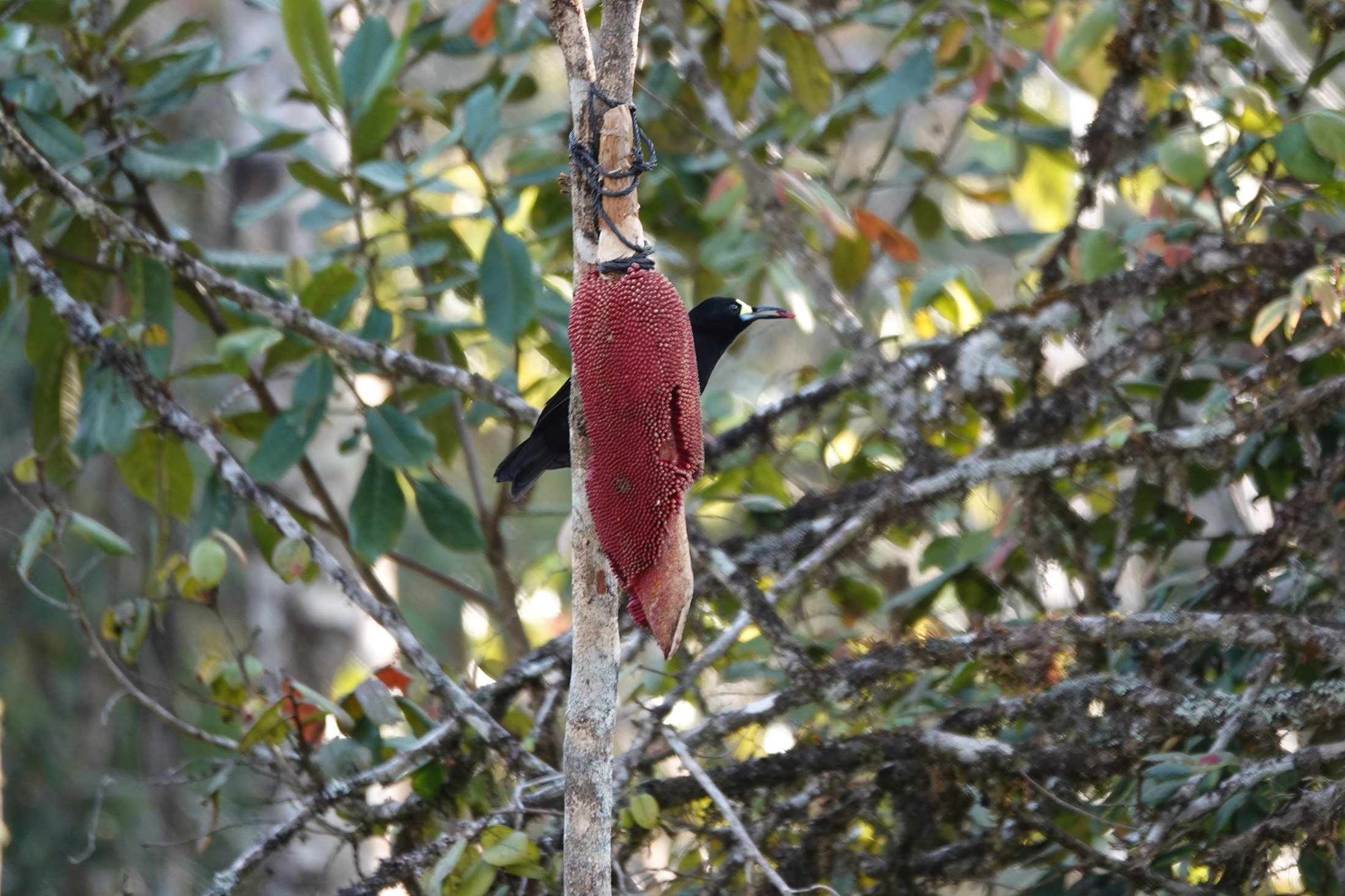
In the morning we got wonderful views of female greater lophorina, (pictured), short-tailed paradigalla, (pictured), and both male and female Lawe’s parotia, (pictured). I got a really nice picture of the male and its gorgeous multi-colored chest.
But the morning wasn’t just about sitting and waiting for birds-of-paradise. We also saw Sclater’s whistler, black fantail, streaked berrypecker and I saw a Papuan island-thrush with its orange eye ring and beak. And a mountain kingfisher announced itself loud and clear right above the hide. All in it was a pretty good morning if a bit slow.
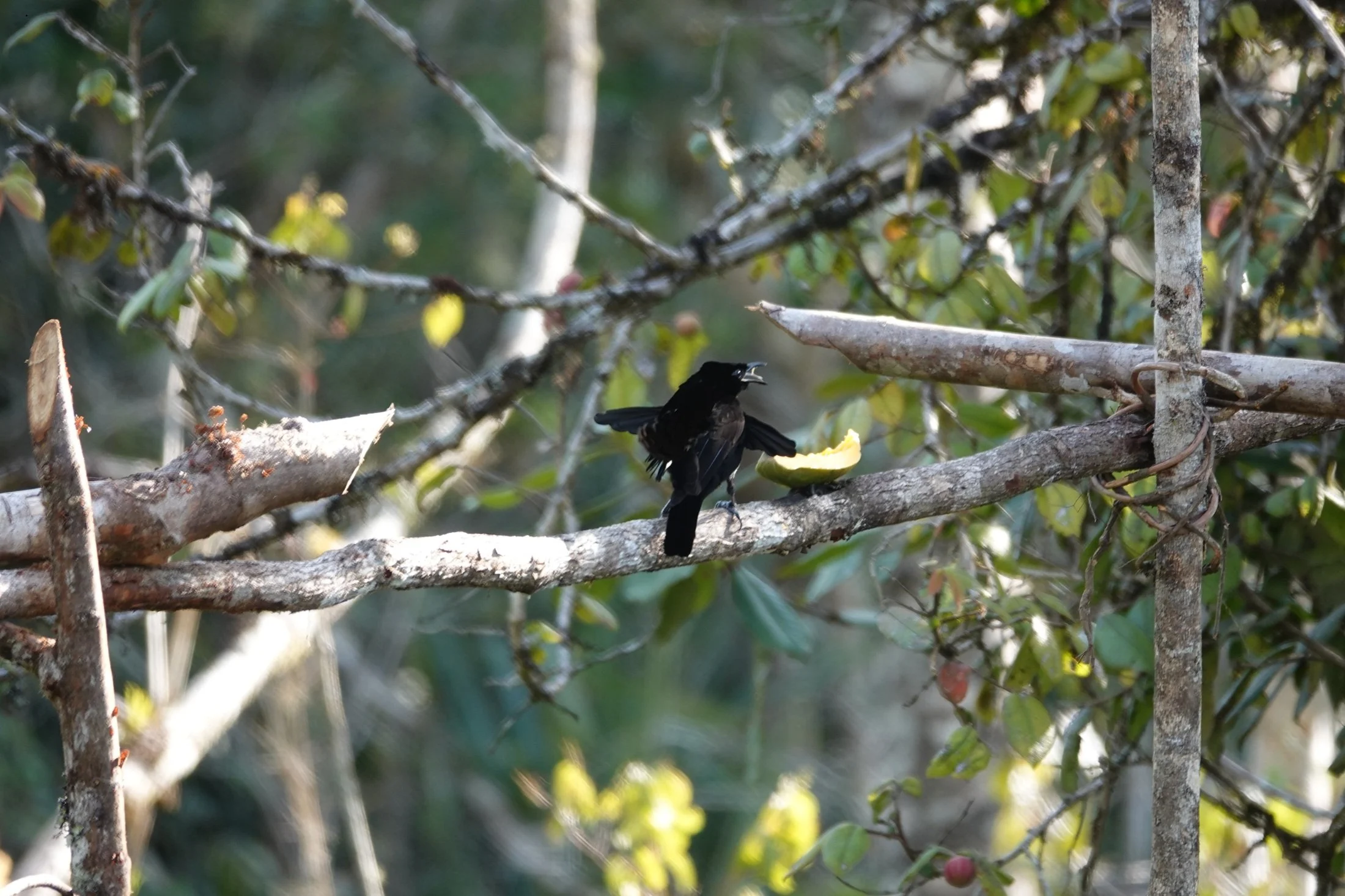
The afternoon session was also good but slow. We finally saw a male greater lophorina, (pictured). What a showoff. We also saw two females. We got great views of a short-tailed paradigalla. And we had a good view of a female blue bird-of-paradise sitting in a tree. I actually got a good picture but its head was obscured by a leaf. Isn’t that the way.
12 species, 7 lifers
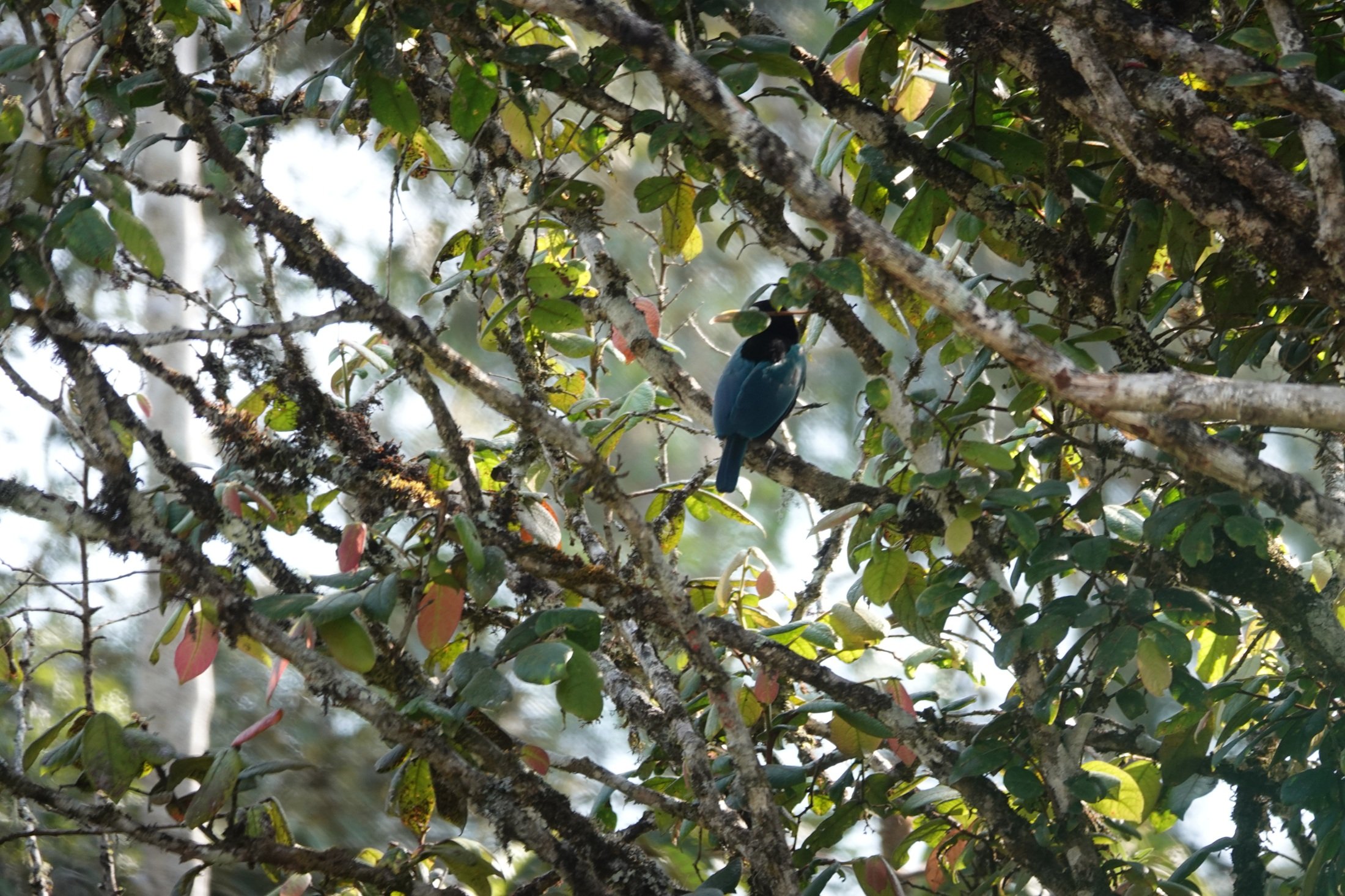
Sigh…
The internet is very intermittent where I’m at now. The birding is fabulous. I will post again when I have better internet.
Sooty Owl to Archbold’s Nightjar, (And Lots in Between)
July 30, 2026
This morning when Paul came to meet us he said, “Come on chaps, we might have an interesting bird out here.”
He started calling and sure enough I saw an owl fly over the back of us. It subsequently flew over us several times and perched for a nanosecond. A sooty owl. What a wonderful surprise and a great start to the day. An interesting bird indeed.
We continued to bird pre-breakfast and got great views of a mountain kingfisher with its unusual looking hooded head. As we looked at it a greater lophorina male came to a known perch and put on a great display for us. I even got a few good pictures. I’ll share one.
Other birds we saw included yellow-billed lorikeet, good views of MacGregor’s bowerbird, a black pitohui, an elfin myzomela, an island leaf warbler, And I got to see my very first white-shouldered fairywren. What a cutie.
After breakfast we drove via two vans, (we switched at one point), to Kumul Lodge. They have feeders outside their dining room and an extensive trail network. I don’t have internet because there isn’t wifi at this lodge and my data plan has run out of data. When you’re constantly uploading pictures and downloading them and talking to the girls back home it eats data. I’ll get it renewed tomorrow and you’ll get a double helping of my jibber jabber.
Meanwhile back to the lodge. The list of great birds we saw is extensive. Brehm’s tiger-parrot, Stella’s lorikeet, lots of Belford’s melidecties, gray-streaked honeyeater, large scrubwen, (my first scrubwrens), tit berrypecker, eastern crested berrypecker, brown-backed whistler, black-breasted boatbill, brown sicklebill, ribbon-tailed astrapia, lesser melampitta, (a brief view of this tiny black bird as it scampered across a forest trail), fan-tailed berrypecker, canary flyrobin, and white-winged robin are the highlights of our time at the lodge birding. We saw Erik because he’s guiding a couple. Both he and Paul said this is their favorite spot in all of PNG. I can totally understand why. Many of the birds I’ve listed here I got great pictures of, mostly at the feeders. You’ll get a load of pictures when I get them all sorted out.
At 4:00 PM we went to John’s garden. He’s our local guide. We were looking for sooty honeyeater but totally dipped on that bird. As darkness gathered we stopped on the trail on our way back and waited and waited and waited and finally an Archbold’s nightjar came briefly to a perch John knew about. Very small nightjar, very brief views but what a way to end an incredible day of birding. Not sure how many lifers today because of the no internet situation.
The lodge is much more rustic than Rondon Ridge Lodge but in many ways I like it more. We’re at over 9,000 feet so we have to dress warmly. I have loads of blankets on my bed and I’ll dress in layers to go to sleep. What fun.
36 species, 17 lifers
Disjointed
July 31, 2026
This evening I’m feeling a bit disjointed. I updated my data plan this morning and still my cellular doesn’t work. (Probably user error.) The swivel on my camera strap came out sending the camera flying. Fortunately, the camera is okay. In Australia I’m going to find a camera shop and a new camera carrying solution. I haven’t talked to my girls for a day or two and I always like to check in with them. As I’ve mentioned before, birding in PNG is, by definition, difficult. El Nino and the resulting drought has made it that much more difficult. Plus, because internet is lacking, I’m not going to publish as good a report on the birds as I would if I had internet. No pictures, (though the pictures I’m taking are fabulous), and probably no hyperlinks.
On the good side of the ledger, I’m healthy. There are people on this tour that are sick. One is very sick. So far, I haven’t got any of the illnesses. I’m wondering if a person builds up an immunity to them.
Okay, enough whining. This morning we birded a bit of the Tonga Trail. It was very quiet but we got stunning views of a male blue bird-of-paradise. We also saw a marbled honeyeater and several old friends.
In the afternoon we birded mostly on our own around the lodge. It’s a wonderfully birdy place. The highlight was a beautiful little garnet robin. I also got in two short naps.
In late afternoon we went to Murmur Pass. We to good views of several birds-of-paradise and one particularly odd one, a Stephanie’s/ribbon-tailed astrapia hybrid. It had characteristics of both birds. And interestingly eBird had a category for that bird. We also saw a rufous-backed honeyeater. We heard a spotted jewel-babbler but couldn’t get it to come in. We’ll have other chances to hopefully see that gorgeous bird.
We went owling tonight with no success. I will try to publish the past two days’ reports in the morning. Now I’m going to dive deep into my blanket pile and have a long nap.
34 species, 5 lifers
Magic Mountain
August 1, 2026
This morning we went to Magic Mountain resort, and it truly was magical. We saw loads of different birds-of-paradise up close at two feeders. A black sicklebill was calling at the first feeder but never showed itself. We also had close encounters with a mottled berryhunter but like the sicklebill it never showed itself.
In the afternoon we birded around Kumul Lodge. We saw many old friends including incredible views of a male ribbon-tailed astrapia. We then birded the quiet forest. John our local guide showed us how dry the moss on the trees is. If it was wet, it would be home to all sorts of bugs and grubs and other bird yummies. The real treat of the trip to the forest was a black-throated robin high up in the canopy.
Phil and I went in search of mountain mouse-warbler. Phil found one but I wasn’t quick enough to it. Afterwards I wandered a path through the forest by myself. I saw a wallaby bounding through the forest. Other than that, it was super quiet. Even though I dipped on the warbler I redeemed myself a bit with a small group of Papuan scrubwrens close to my room.
As I posted on my website internet continues to be very weak. I will post many entries when we leave here in a day or two. I’m going to try to pick out one, maybe two pictures to post with every day. It will be difficult because I’ve gotten so many incredible pictures of these beautiful birds.
My camera strap is shot but I think I’ve figured out a temporary solution. I have a camera case specifically made for this camera. The camera fits in snug and there’s a strap on the case that fits me pretty well. I will leave the top of the case unzipped and then remove the camera whenever I want to take a picture. Not ideal but it will work.
31 species, 9 lifers
Sorry for no postings for such a long time. The internet in the places we’ve birded has been very weak. I wrote every night and took some good pictures. Back in Port Moresby now with strong internet. Hope to get the postings caught up over the next couple days.
Halfway Day
August 2, 2026
Today is halfway day for this epic birding trip. I just did some rough math and I think I’ve got about 468 new lifers from the trip so far. It’s sort of been a day of reflection for me as I think about all I’ve done and all the things I will do over the next 62 days. Eight more days of PNG. Then a month in Northern Territory, Australia. That time will include some good birding trips but it will also include a tourist trip to Uluru, (a bucket list thing), plus some mini-tours that I can dictate how hard or not how hard we bird. Then this trip will end with a fun birding cruise in the Banda Sea.
I’ve had to put a lot of thought into next year. I call it Brahmaputra planning. The year will start in southeast Asia. Most of the summer will be in South America. Kenya in the fall. And then a fun trip to Oman to end the year. Right now, that’s the tentative plan for next year.
One of the reasons I’ve succeeded in life is I tend to seek out things where failure is virtually guaranteed. And yes, I have failed many, many times. But the successes have been so much sweeter. I got to thinking about this 7000to70 business and I realize that failure is virtually guaranteed. Think about it. To get to 7000 species in four years you have to get 1,750 lifers every year. I’m over 2,100 right now and we’re still a few months and two and a half trips from October 17th. So, I’m already quite a bit ahead of schedule. But the trips will begin to yield fewer lifers just because of overlap. I figure if I can get through next year I think I’ll be able to get to 7000 by October 17th, 2029. But this whole thing certainly fits the failure is virtually guaranteed category.
There you go, some halfway day musings. How about the birding? It started for me when John our local guide dragged me out into the yard and showed rufous-naped bellbird.
Afterwards we went back to Murmur Pass this morning and birding was very slow. We dipped on mountain rails and the spotted jewel-babbler continued to tempt us with its call but never showed.
We got very good views although very high up of an orange-billed lorikeet. Plum-faced lorikeets, (old friends), showed well too. So gorgeous. And for me at least, the stars of the day were three blue-faced parrotfinches. They are a stunningly beautiful little bird that like many finches is on the ground and feeds on seeds. They don’t stay still for very long but we got very good views.
In the afternoon we birded in the forest. I got a recording of a bird and tried drawing it in. Paul tried with me. And then I tried again by myself with no success. But it was lots of fun.
Right before supper I went to the parking area and drew in for a fleeting glance a mountain mouse-warbler. They are well named. They move along the forest floor just like a mouse.
No internet tonight and more limited internet over the next few days. I promise to sort through pictures and get one or two to post on every day. I’m sleepy tonight. Instead of going owling like I’ve done the past two nights I’m going to sleep early. BTW, we heard two owlet-nightjar species last night. I think halfway day calls for something celebratory…like a long winter’s nap.
25 species, 3 lifers
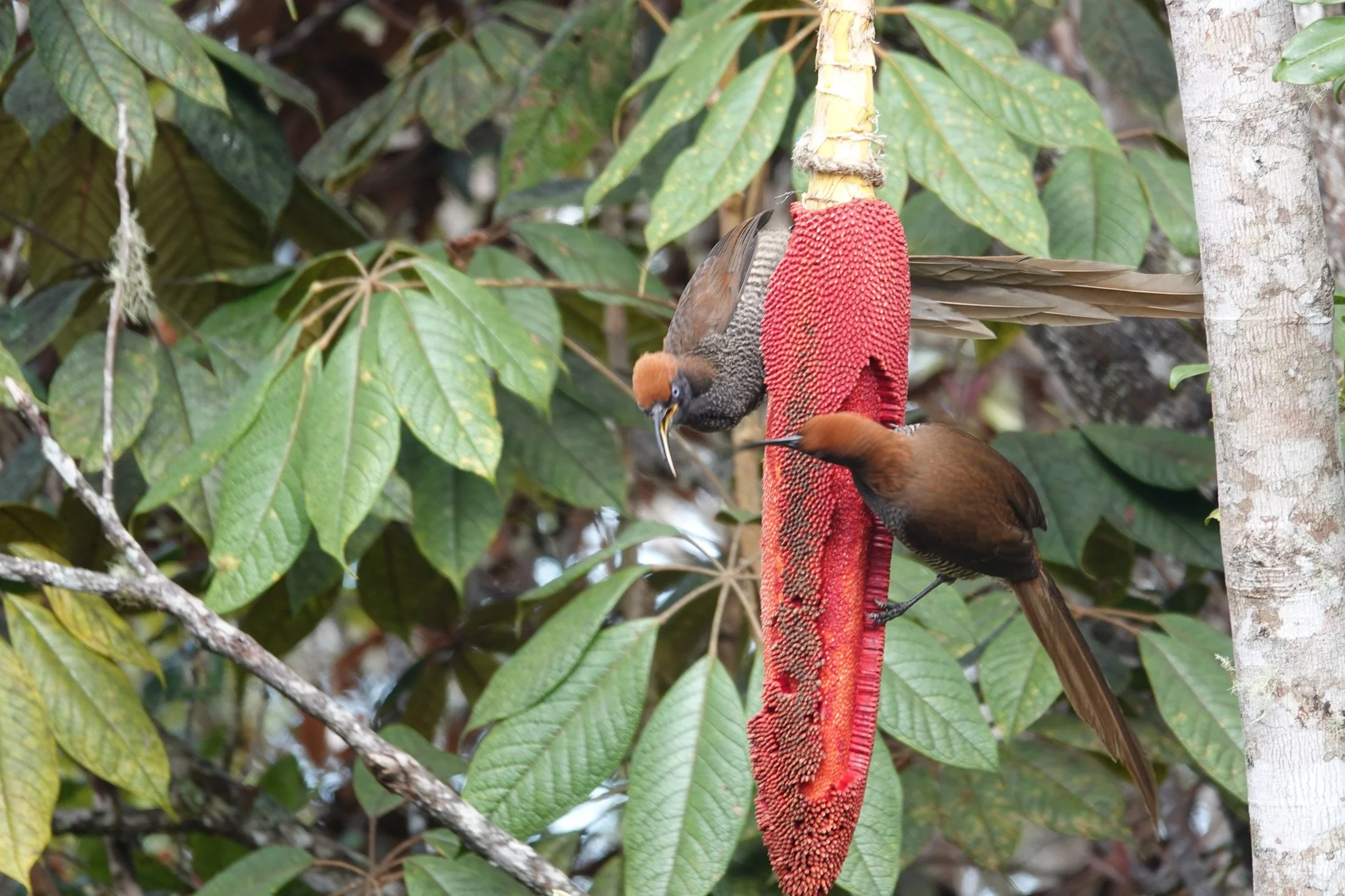
Grounded
August 3, 2026
Today we went to the airport in Mt Hagen, headed to Tabubil and apparently some really good birding. Not so fast little birders. We assume it was because of bad weather in Tabubil our flight was cancelled. This after we already checked our luggage and got boarding passes.
The only redeeming feature of the trip to the airport was good views of a Papuan harrier and Australian pipits looking out from the departure lounge.
We had lunch at a really nice spot. I went to a place to see about phone service but it was Digitech, not Digicel. So I continue to have no internet. When I get to Australia in a few days the first thing I will do after I get through security and get my bag is go to a cell provider and get the best service available for the month I’ll be in Northern Territory. And I’ll have the young kid who’s a hotshot with phones, (There is invariably one at the airport cellular counters.) set my phone up. You don’t understand how totally addicted to and dependent upon the internet you are until you don’t have access.
We are spending the night at Magic Mountain. We went to their hides earlier in the trip. We are the very first guests staying in the rooms we’re staying in. They are nice though it’s chilly again tonight. Supper here was really good too. I saw only old friends here in the birding world but I did see a mama brown sickle bill feeding red seeds to a fledgling. (pictured, assuming I have enough internet juice when I post this). It was a sight to behold.
Tomorrow we’ll try again to get to Tabubil. A birding trip to PNG is very frustrating because of the canceled flights. I am doubtful that I’ll reach my lifer goal for this trip because of the El Nino dryness and the canceled flights. Already those cancellations have cost about a day and a half of birding give or take. Fingers crossed, yet again.
19 species, 2 lifers
Tabubil
August 4, 2026
This morning we headed to the airport for another try at flying to Tabubil. (That was after several adventures at the Magic Mountain rooms we were the first to stay in and a really yummy breakfast.) The day before Paul made a great connection with the lady the basically runs the airport. She made sure we were on a flight and she guided us to the airplane. We were all thrilled when the plane took off.
Once we got to Tabubil, about an hour later, we checked into the hotel and had lunch though the service was glacially slow. Then we went birding.
We started at the dam but were shut out on the birds we wanted to see. (More on that in a bit.) Then we birded Henry’s Road. What a cool spot. Like everywhere the birding seemed to come in waves. Throughout the afternoon some of the highlight birds included beautiful fruit-dove, lots of Papuan mountain-pigeons, beautiful dusky-cheeked fig-parrot, red-flanked lorikeet, a big flock of dusky lory as we were leaving the road, gorgeous emperor fairywren, (their blueness is stunning), tawny-breasted honeyeater, helmeted friarbird, southern variable pitohui, a brown oriole I discovered, mountain peltops, hooded butcherbird, yellow-faced myna, and red-capped flowerpecker, another bird I was able to find. As you can see it was quite the afternoon but we were just started.
We went back to OK Menga Hydro Intake. We were rewarded with beautiful if distant views of two Salvadori’s teal, birds we all wanted to see. We also saw three torrent flyrobins, another target for the torrents area, (although the water was very, very low because of the drought),
We ended the evening looking for the mythical shovel-billed kookaburra. Only heard it. But as we waited Pesquet’s parrots flew over as did several gray crows. And we heard the eerie call of a pale-vented bush-hen as we headed back to the airport.
Today was just the tonic for all that ailed us from the canceled flight.
34 species, 20 lifers
Kookaburra at Dawn
August 5, 2026
This morning we headed to the same spot we heard the shovel-billed kookaburra last night. One was calling and soon one of the guides located it for us. It was very early and it was backlit but we could see its shovel bill that reminds me of a tyrannosaurus rex. We were all pumped to see this special bird.
We then began the arduous task of driving up Hindenburg Wall. The roads were challenging at times and Shelley and I were riding in the rig with the sideways bench seats. I locked my feet onto on the facing seat and most of the shocks from the bumps were absorbed by my core.
Along the way we had to cross a pretty substantial stream crossing the road. It was a delight because we saw a torrent-lark, the last of the torrent related targets. It showed very well.
We finally made it to the spot we wanted to bird, Telefonium Road. It was really foggy to begin with and super quiet. But eventually the fog lifted and we did see some birds including gorgeous white-breasted fruit-dove, black-capped lory, two female astrapia, Loria’s satinbirds, and the rare thick-billed berrypecker.
We stopped at another spot to look for birds we never found. But we got on a flock of small birds. Well, most of us did. I dipped on the whole little flock. It was so comical because I couldn’t find where they were. I guess I should have asked Paul. Part of the learning how to be a birder. The education continues.
After a lunch of yummy toasties, fries and chocolate cake we hopped on a big bus for the journey to Tabubul. It was a long, dusty journey on a busy mining company road. Every time mining company vehicles came by there was a lead vehicle with a flag on the front of it that said how many company vehicles were coming. We had to pull to the side of the road and wait for said vehicles, mostly huge trucks, to pass. That said I’m looking forward to birding here. We’ll have some adventures I’m sure.
17 species, 4 lifers
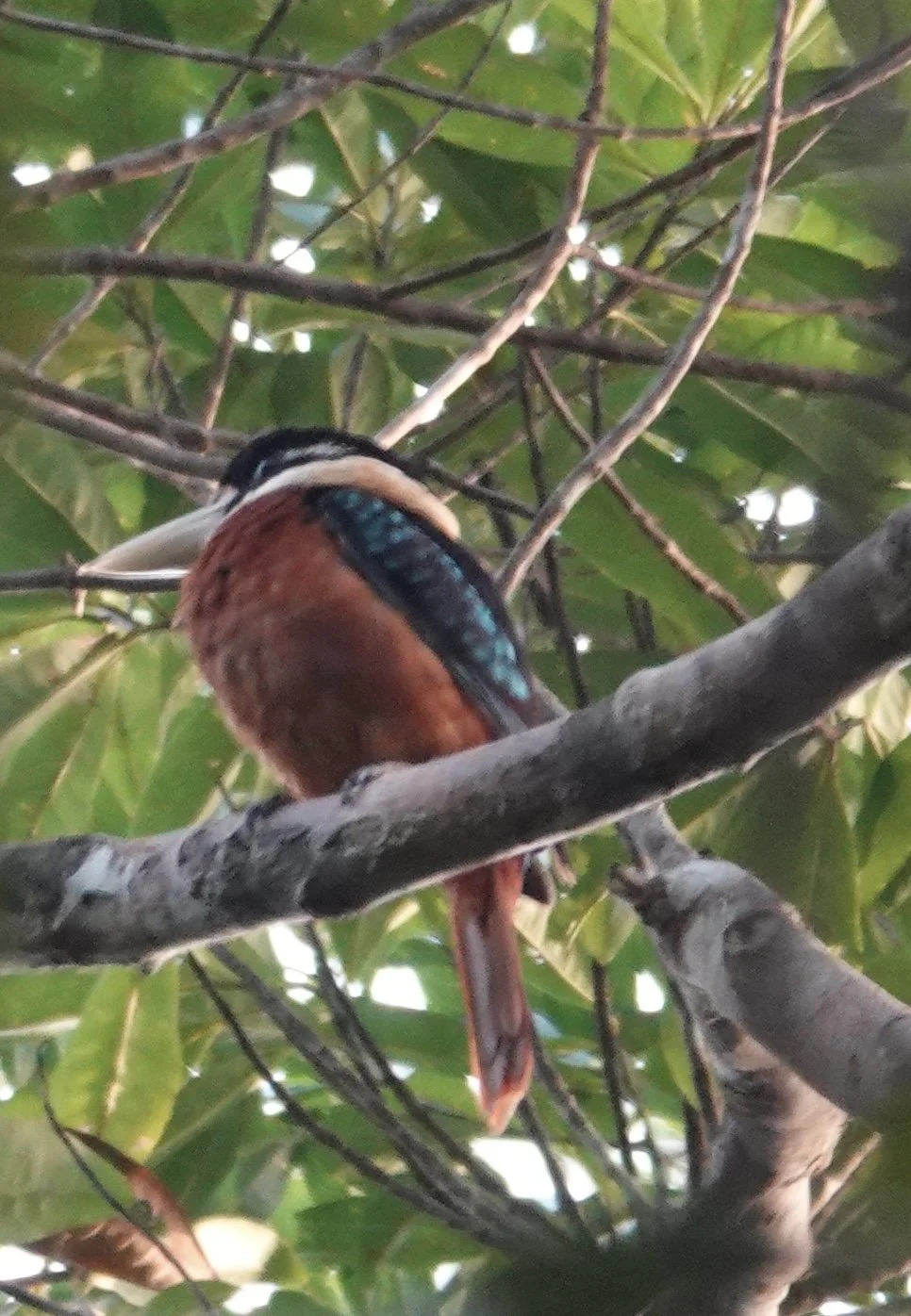
Painful Then Cloudy
August 6, 2026
Don’t worry, the title has nothing to do with my health. I haven’t broken anything and I don’t have any ailments. Knock on wood. It’s about this morning’s birding. It was so slow it hurt.
We birded KM17 and KM14. The morning started good as three yellow-capped pygmy-parrots flew over us. Shortly after one of the local guides located a rufous-bellied kookaburra, (pictured), and we got great views. We then went to a known roost and got good views of a male greater bird-of-paradise and partial views of a female. Then the forest pretty much went quiet. Spangled drongo were the only other birds of note.
We went from KM17 to KM14 and the quiet was even greater. Wompoo fruit-dove, black-capped lory, frilled monarch and the strange call of an ochre-breasted catbird were the extent of the birds we saw in an hour and 42 minutes. It was a grim morning of birding. And it wasn’t Paul or the local guides. They are working so hard to put us on birds. It’s the drought. The trees are not producing fruits or nuts and the birds are definitely suffering.
After lunch Phil and I went to a department store and bought rubber boots for the coming river adventure. During lunch and after the cloud cover definitely deepened. The clouds were so thick I wondered if we might get rain. (Dream on.) But I think it impacted the birding.
We went to Boystown Road in the afternoon. The contrast in the birding from the morning was incredible. Pinon’s imperial-pigeon, dwarf koel, long-billed cuckoo, Papuan spinetail, yellow-gaped honeyeater, Boyer’s cuckooshrike, lowland peltops, golden monarch and frilled monarch were the lifers for me from the afternoon. We also saw many old friends.
I have a theory as to why the birding was so good. I think it was the deepening cloud cover. Maybe the birds were less afraid of being discovered. Whatever the case may be it was a fun afternoon of birding.
31 species, 13 lifers
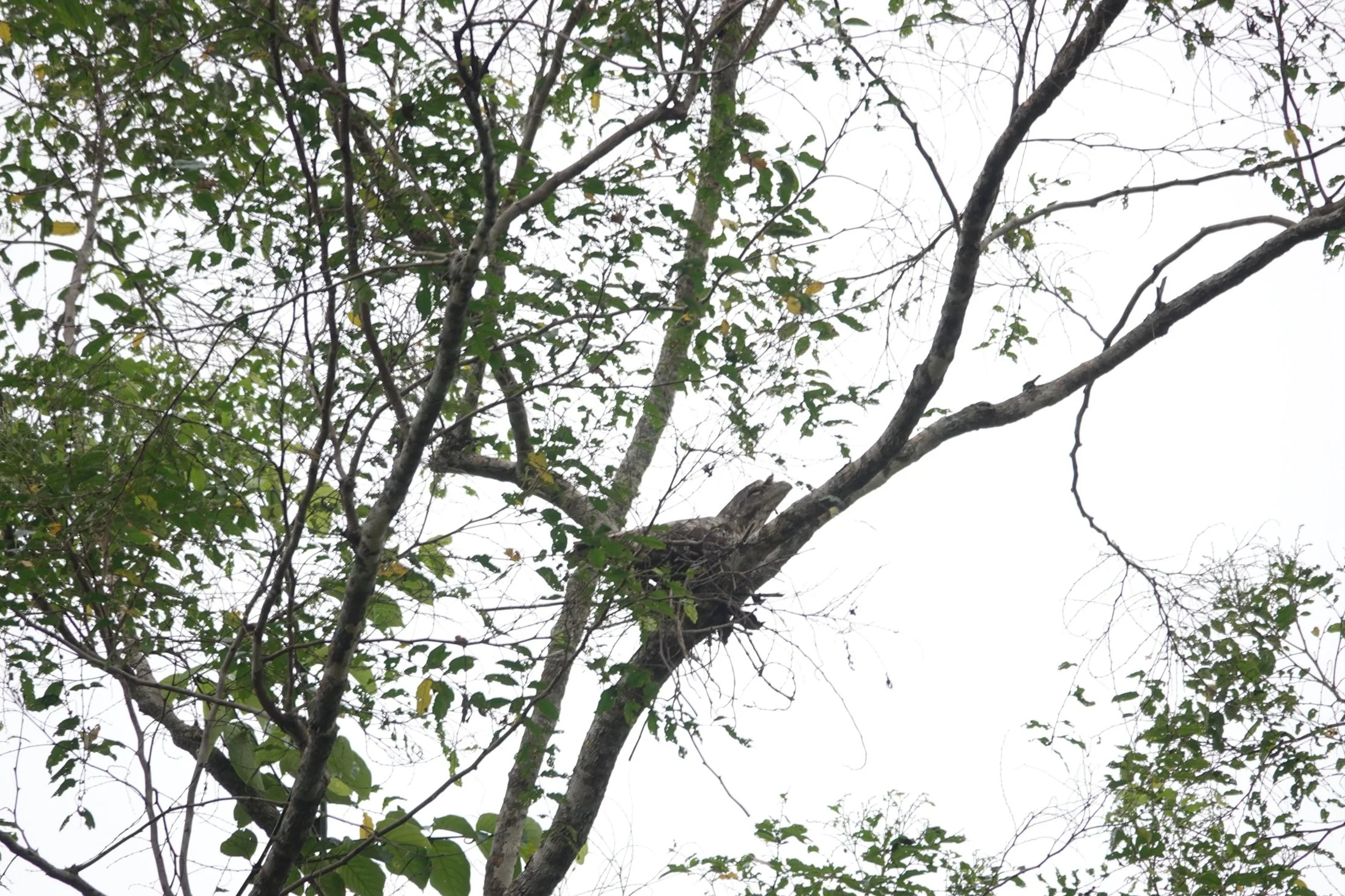
River and Camp
August 7-8, 2026
Yesterday morning when I tried on my rubber boots, I knew one thing immediately. I had to bring along a pair of hiking boots. I’m so glad I did because the rubber boots were barely tolerable.
If it’s a drought it means there isn’t much water. (duh) So why not go to where the water is, the rivers? That’s what we did. We loaded into a motorized canoe and headed the Fly River to the Elevala River. When we got to the mouth of the Elevala River we immediately saw the impact of the drought. The water level was super low. In several places we had to get out of the canoe so the guys driving it could get it over the really shallow places.
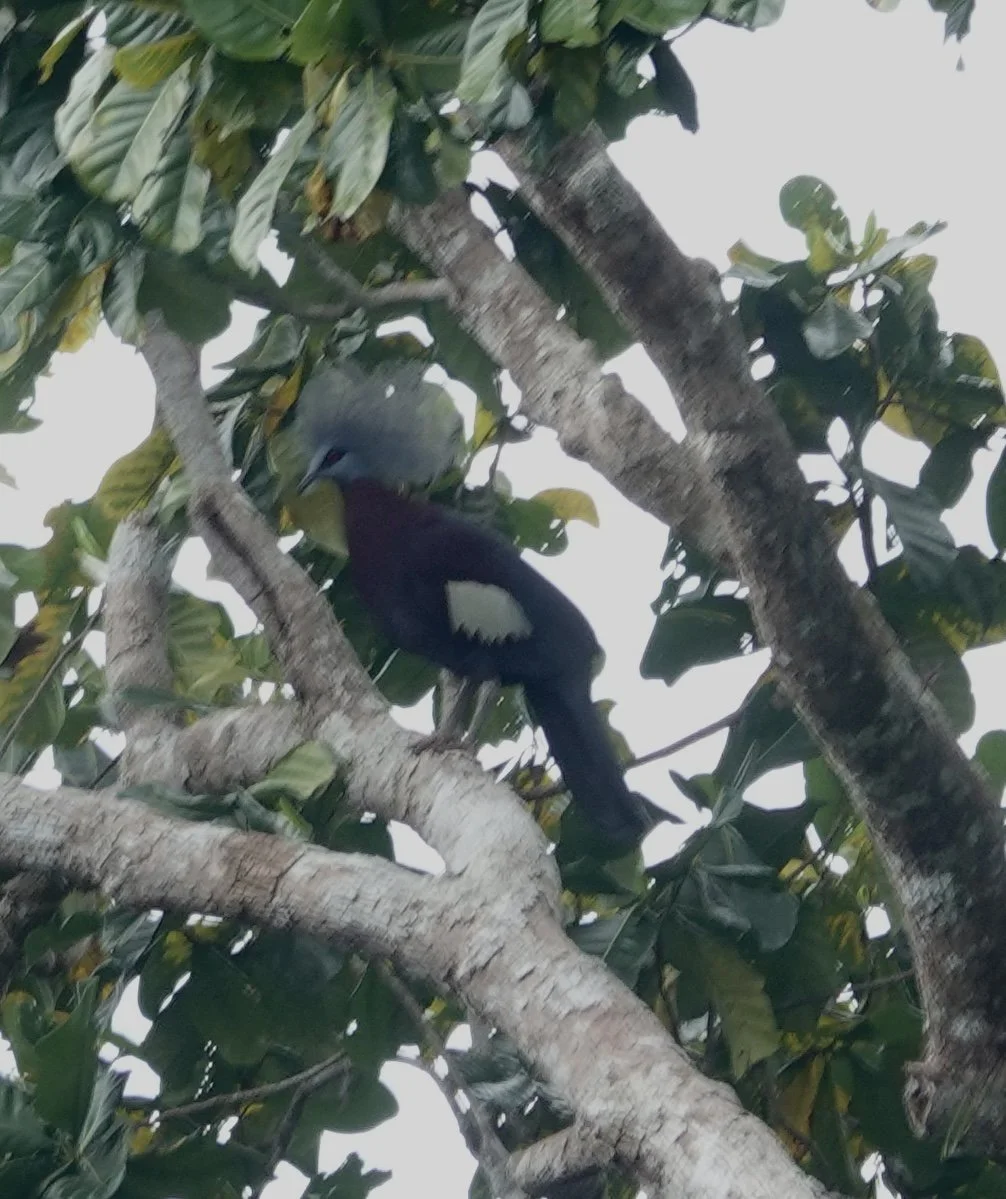
The birding along the way was fantastic. We saw several long-tailed honey-buzzards and one was doing an odd wings over the back display. We saw a Papuan frogmouth, (pictured), perched in one tree. A gray-headed goshawk zoomed by at one point. We had both palm cockatoo and sulphur-crested cockatoo. Both beautiful but one is gray and one is white as their primary colors. We stopped at one spot to look for king bird-of-paradise. A beautiful striking bird. It took some doing to find it but we did. And we got a bonus bird as well, a Sclater’s crowned-pigeon, (pictured). What a stunner with its most unusual crown. Yellow-streaked lory, streak-headed honeyeater, puff-backed honeyeater, golden cuckooshrike, glossy-mantled manucode, golden myna were among the many species we saw. We also saw a very cooperative sacred kingfisher, (pictured), an old friend
We stayed at Kwatu Lodge, also known as the fish camp. It is a very primitive set up. No electricity and no running water. After a packed lunch we went in search of a very special bird, the New Guinea flightless rail, (pictured). We went to a hide specifically set up for it and we got great views of three birds. They are huge rails.
We had supper of corned beef hash, some sort of tuna, some shredded carrots, some rice and some noodles reminiscent of ramen noodles. It was actually pretty good.
After supper we were going to go owling but the rain came pouring down. Hooray for the rain.
This morning we were up and about early for the owls and we were rewarded with great views of starry owlet-nightjar and Papuan owl.
We then took a short ride down the river for good views of a twelve-wired bird-of-paradise perched way up in a tree. It even did its display for us.
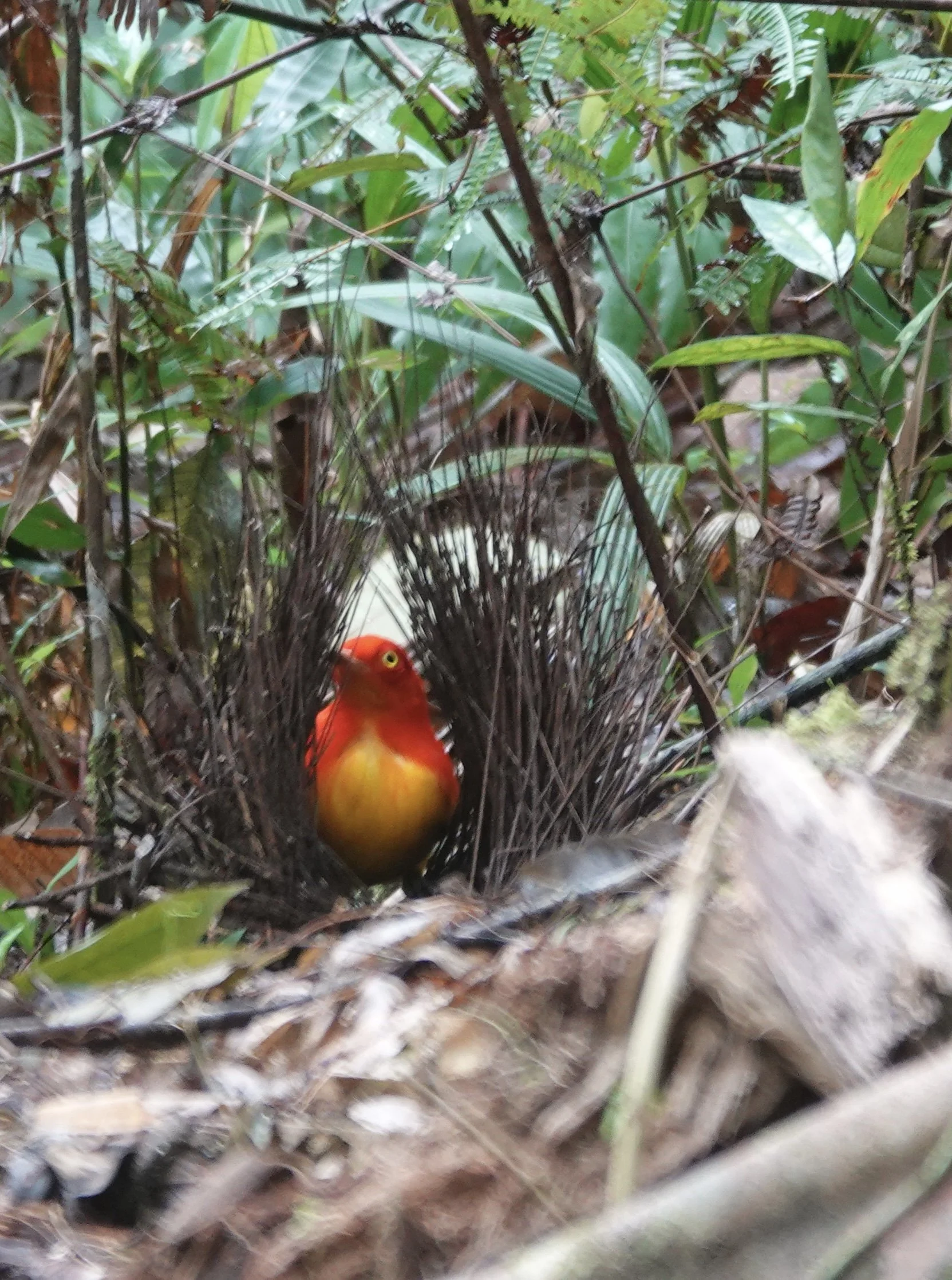
After breakfast we were off to see another special bird. But before we got to its hide we saw Campbell’s fairywren, a pretty rare bird. At the hide we got incredible views of a male flame bowerbird, (pictured). Probably the most stunning bird of the whole trip. We got brief glimpses of Wallace’s fairywren after our time with the bowerbird. And we saw a large flock of Papuan babblers.
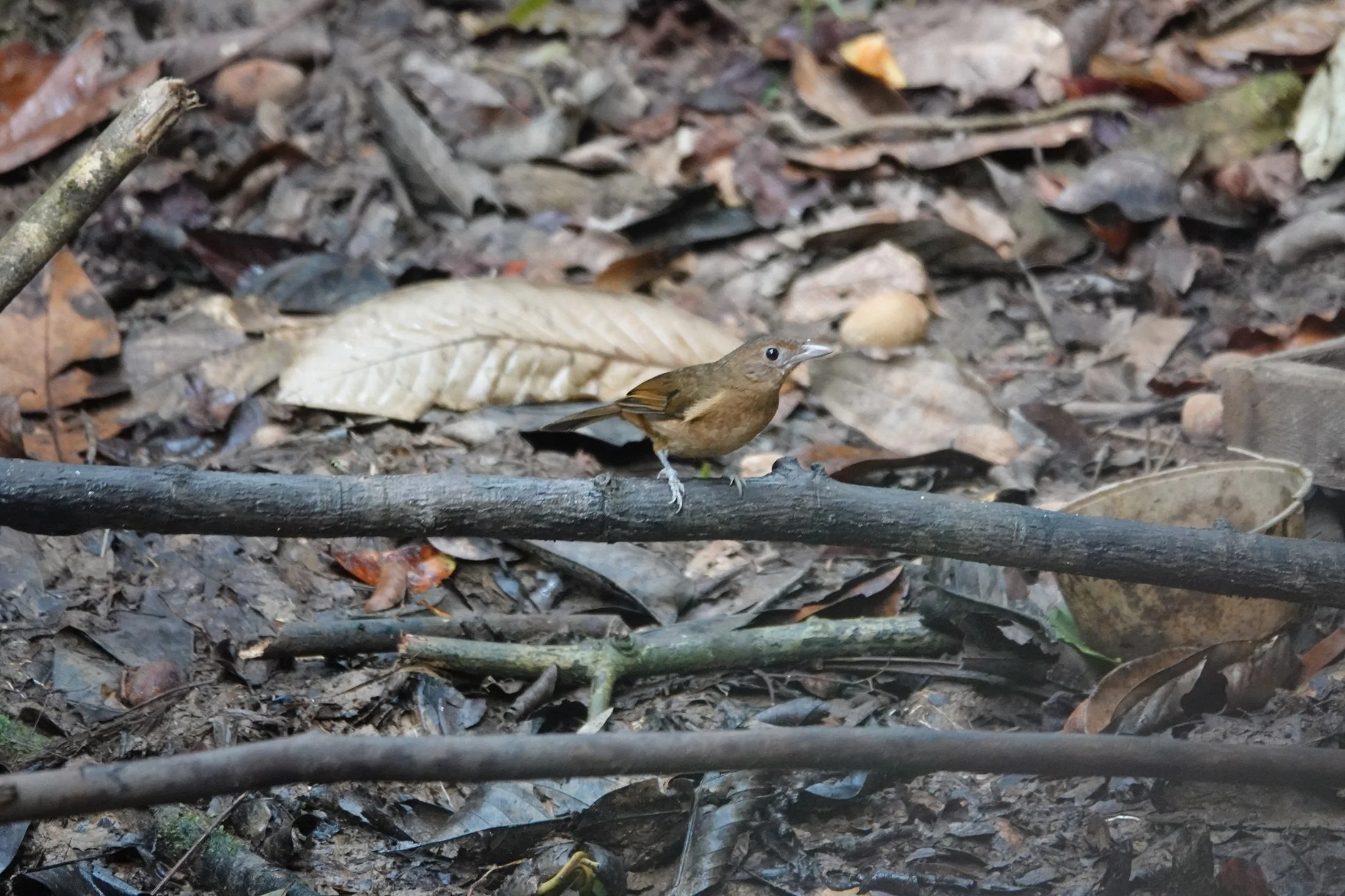
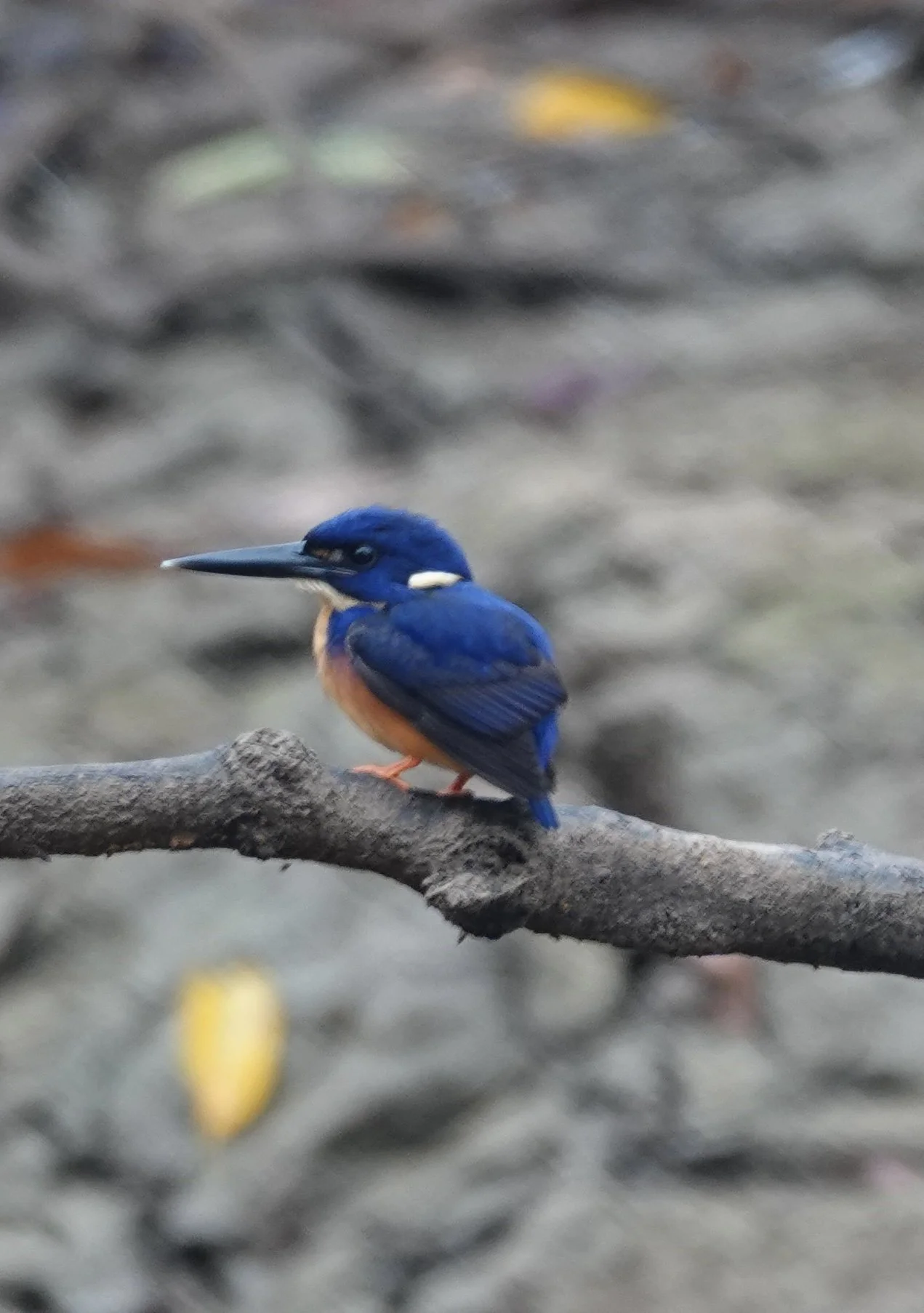
After lunch that centered around spam and was actually pretty yummy we had a break in the actions, (although we got good views of a gorgeous purple-tailed imperial-pigeon), we packed up and headed down the river. On the river trip we got great views of the beautiful little kingfisher, so stunning in blue and white. We stopped at the feeding hide and although it was slow we did manage views of a yellow-legged brushturkey, (a very shy bird), a partial view of a little paradise kingfisher, black-winged monarch, spot-winged monarch and black-sided robin. We also got good views of a rare for this area little shrikethrush, (pictured).
On the trip back to the big city. Along the way we got rained on some. It appears as thought the drought is subsiding a little. I sure hope so because they really need the rain.
When we got back to the hotel we’re staying at we wolfed down our supper because it as late and we were ravenous..
What a great two days of birding.
August 7th 51 species, 17 lifers.
August 8th 51 species, 15 lifers
Done…Too Early
August 9, 2026
This morning we drove from to Tabubil fully expecting to bird this afternoon. We all gathered this afternoon, but our local ground agent informed us that there is no fuel to be found to fuel up the bus we need to go to the cool spot we were going to. This is a perfect way to end the PNG experience. If you want to see birds-of-paradise this island is the place to see them. And from what Andrew, a participant on this tour has told us West Papua might actually be more difficult than this to bird. But all in this tour has not come close to meeting expectations.
It’s not because of Paul and Erik on New Britain, or Paul on PNG proper. And its certainly not about the local guides. They’ve all worked very, very hard to put us on birds. It’s more about canceled airplane flights, (we still have one tomorrow, gulp.), and the extensive drought caused by El Nino. It’s raining right now BTW. And now this, a fuel shortage caused by events completely out of the control of the local ground agent.
I wish there was better internet so I could do some of the chores I have on tap for Port Moresby. I’d be tempted to go birding there. But perhaps this is a good way to end everything here so that I can have a long rest going into a month in Northern Territory.
That’s another thing I’ve figured out. My poor cell coverage from the cell plan I have isn’t about me. It’s about the poor cell infrastructure here. Everyone on the trip has had issues with cell service at one point or another.
I can’t even look at my eBird trip reports right now for PNG and New Britain to see where I stand vs. my expectations. I suspect I will fall short by 100 species or so. It’s one of the reasons I’ve built in extra. Though I’m still working on the strategy for next year. The SE Asia part to kick off the year is pretty much in place. It’s South America that is still very fluid. Brahmaputra planning at its finest. If I sound disappointed I am, about this afternoon because it defines fun but disappointing PNG experience.
One final fun note. Today was Paul’s birthday. The staff of the kitchen brought out a piece of cake with candles for him and we sang him happy birthday.
Species 3, lifers 0
Perspective
August 10, 2026
Although we had to wait some, (What else is new?), we made it back to Port Moresby and the Raintree. The flight over gave me time to think about all that has happened on this trip. I did the math and I came up short by about 95 species from an expectation of 303 lifers. That’s a huge shortfall. But if you think about it, about two thirds, if not more, of that shortfall was caused by the canceled flights and the lack of fuel. Those three events probably cost about 60 to 70 species. I talked to Paul a little bit about this and he said that many of the missing species I have a chance to pick up in Northern Territory because there is overlap.
Speaking of Northern Territory I got the agenda for my trip there today. It’s action packed and I can hardly wait.
For now, I’ll leave PNG as a disappointment because it didn’t meet expectations by a long ways, but hey, that’s birding and it’s part of the 7000to70 experience. And oh, for the beautiful birds we did see.
New Britain:
71 species, 45 lifers
PNG:
201 species, 163 lifers